

Our Latest News
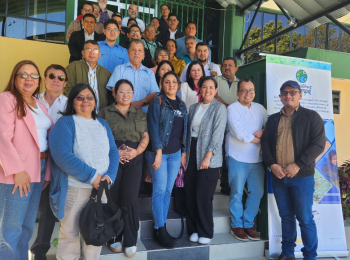
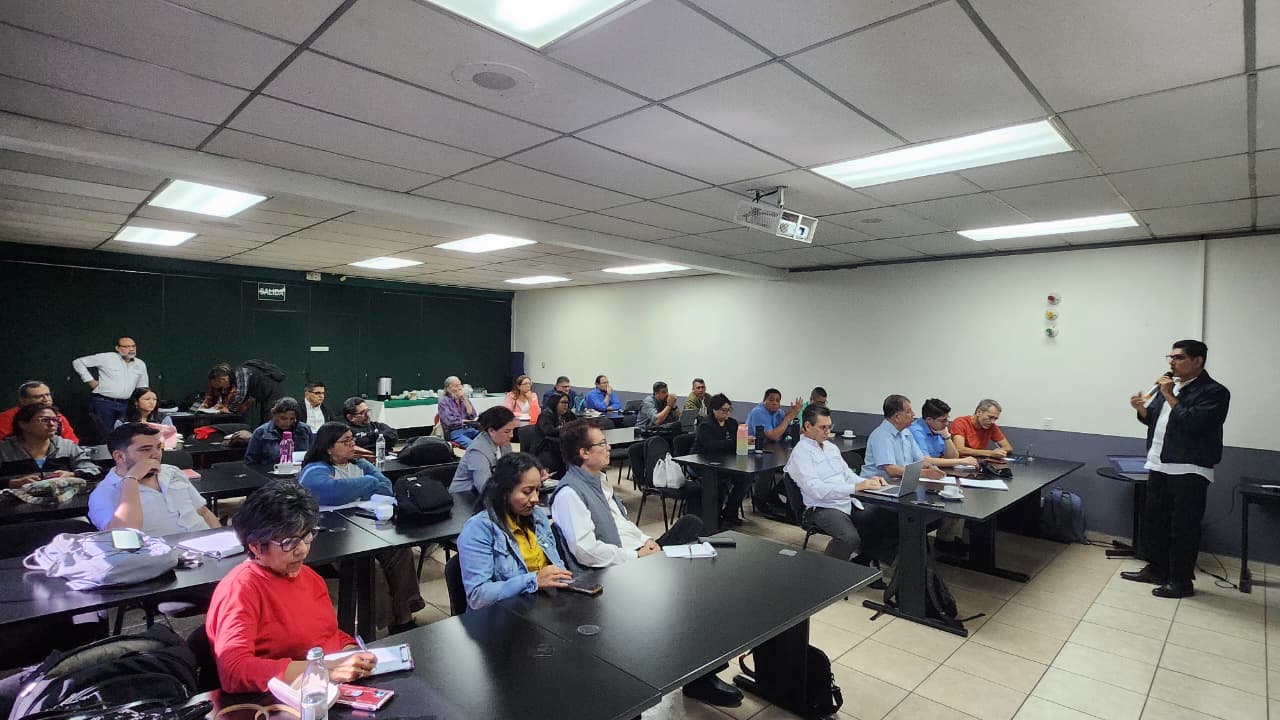
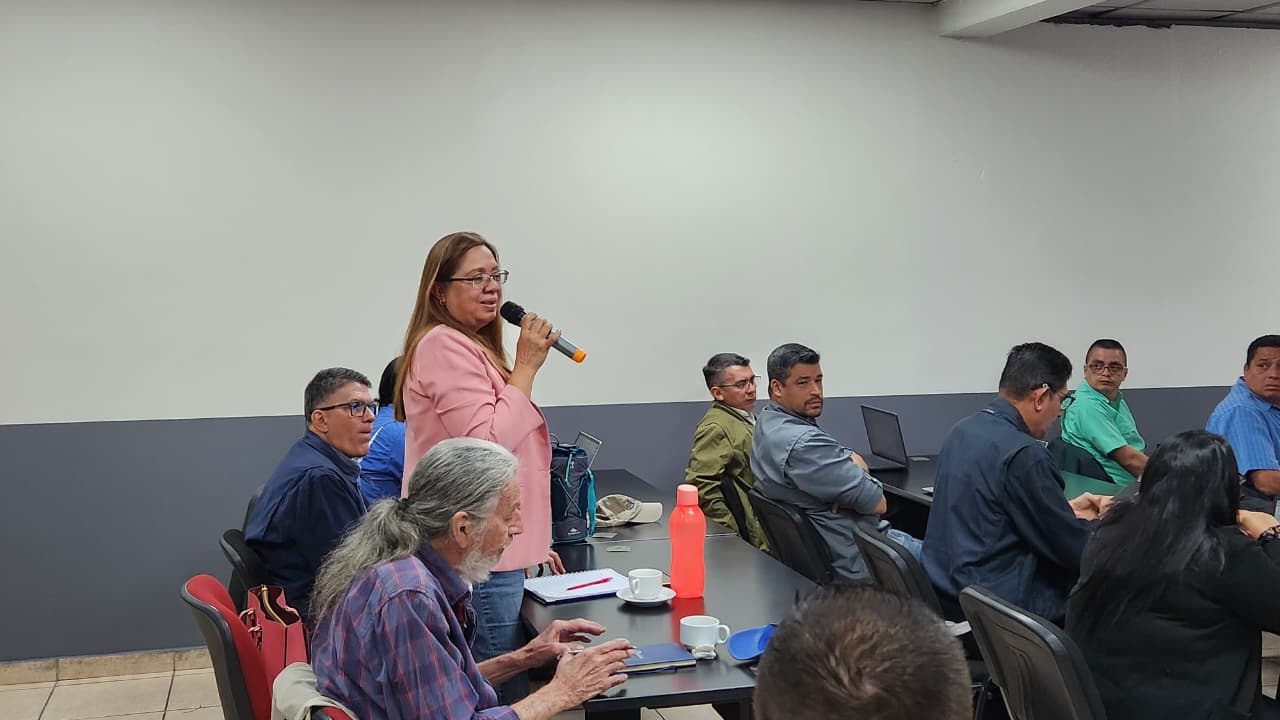
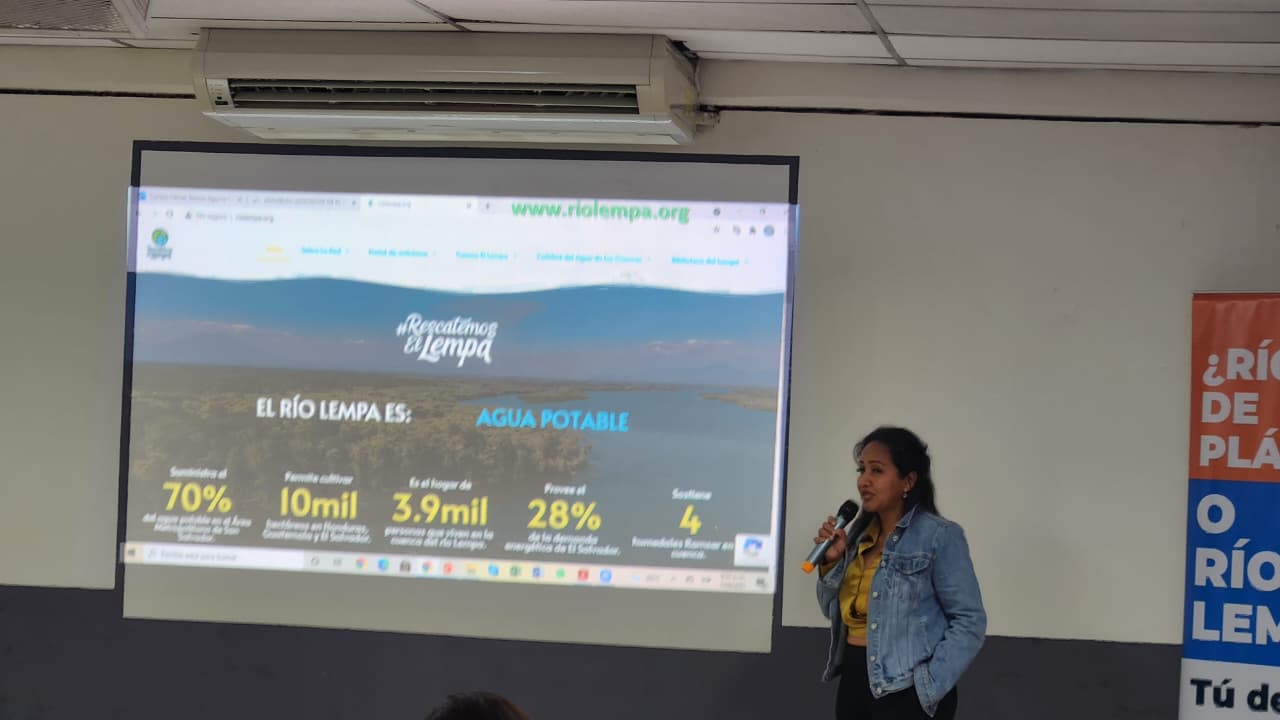
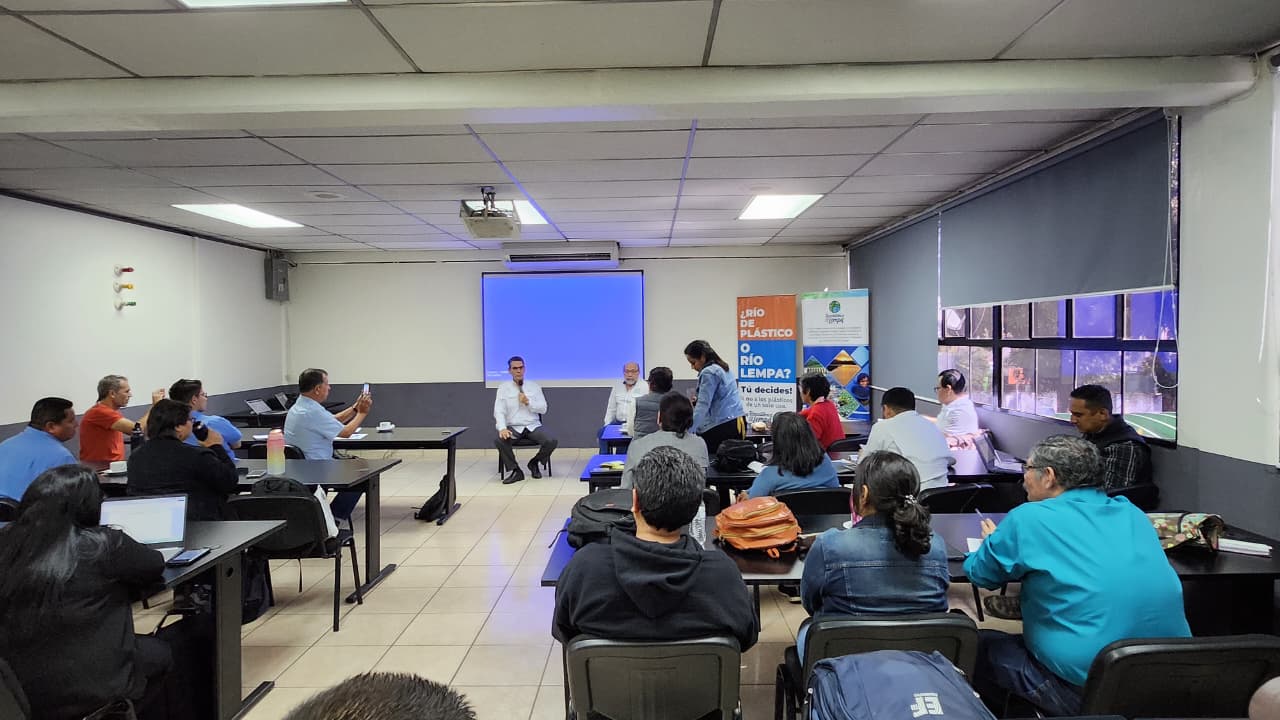
Driven by the strong belief that protecting the environment means protecting life, the Trinational Network for the Rescue of the Lempa River held its first 2026 Annual General Assembly—an important milestone in the effort to safeguard one of Central America’s most vital and threatened river basins.
The meeting brought together community representatives, civil society organizations, and social leaders from across the region, all united by a shared goal: to protect the Lempa River, a critical source of water, livelihoods, and hope for millions of people.
One of the highlights of the Assembly was an open conversation with Dr. Luis Ramos, Director of the Somos Río Lempa program, who offered a clear and thoughtful overview of the river’s current state and the urgent challenges facing its recovery. His message was direct: the time to act is now.
“Taking care of the Lempa is not just an environmental issue; it is a social, ethical, and human responsibility,” Dr. Ramos said, emphasizing the need to raise environmental awareness and to bring together real, coordinated efforts among communities, institutions, and organizations to stop the ongoing degradation of the basin.
A major concern raised during the Assembly was the rapid growth of urban and construction projects near the watershed, which are already causing serious environmental damage. Participants warned that these developments are harming water quality, ecosystems, and water security for local communities, and stressed that, without proper regulation, they could lead to irreversible damage to the river’s natural balance.
A key focus of the agenda was the presentation and discussion of the 2026 Annual Operational Plan, which includes concrete actions in environmental monitoring, environmental education, community advocacy, and capacity building. The plan aims to move beyond words and into action.
The Network also announced a series of activities to be held in observance of National Lempa River Day, an important opportunity to encourage public reflection, civic engagement, and collective commitment to protecting the river. These activities are designed to turn environmental awareness into practical, long-term actions with real impact on the ground.
The Assembly sent a clear message: 2026 will be a decisive year. The new annual agenda is built around innovative initiatives, strategic partnerships, and projects focused on institutional strengthening and sustainable development.
Network leaders agreed that unity among countries, communities, and organizations is the greatest strength in facing the environmental threats to the Lempa River.
The Trinational Network for the Rescue of the Lempa River reaffirmed its commitment to work across political and administrative boundaries, strengthening a shared regional vision for the river’s recovery. This collective effort shows that when communities come together and speak with one voice, a more just, sustainable, and humane future is possible.
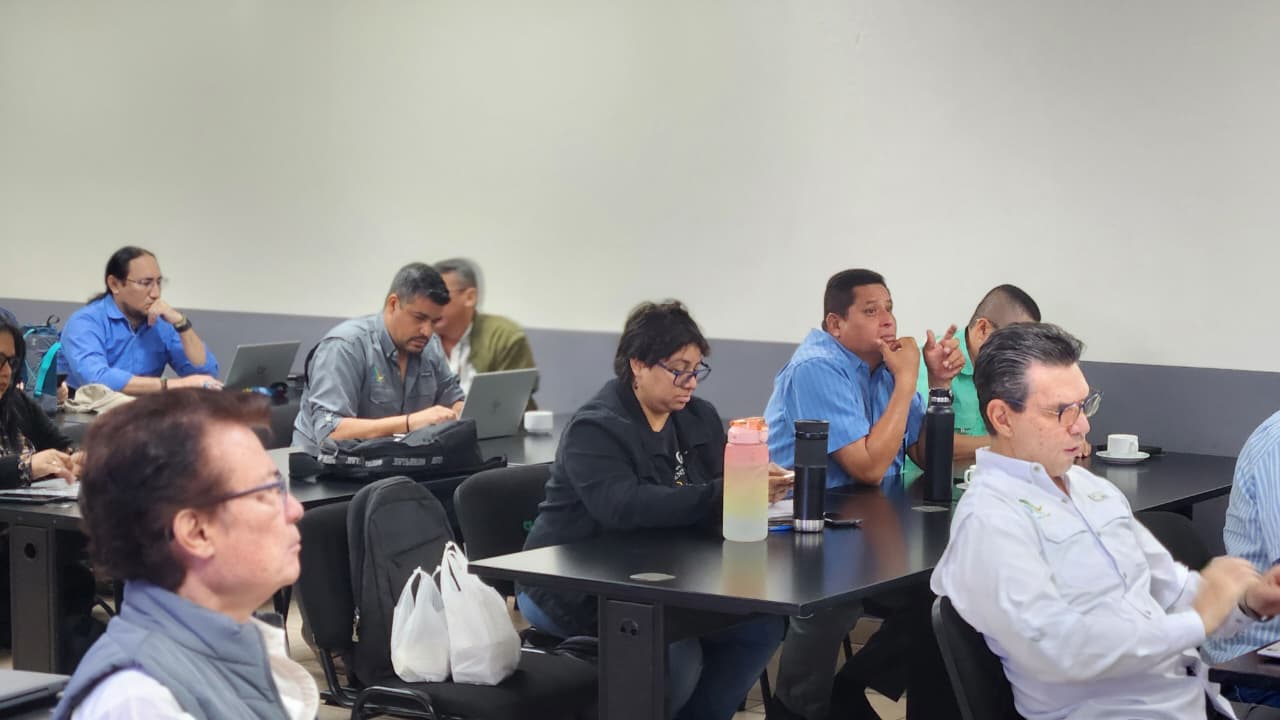
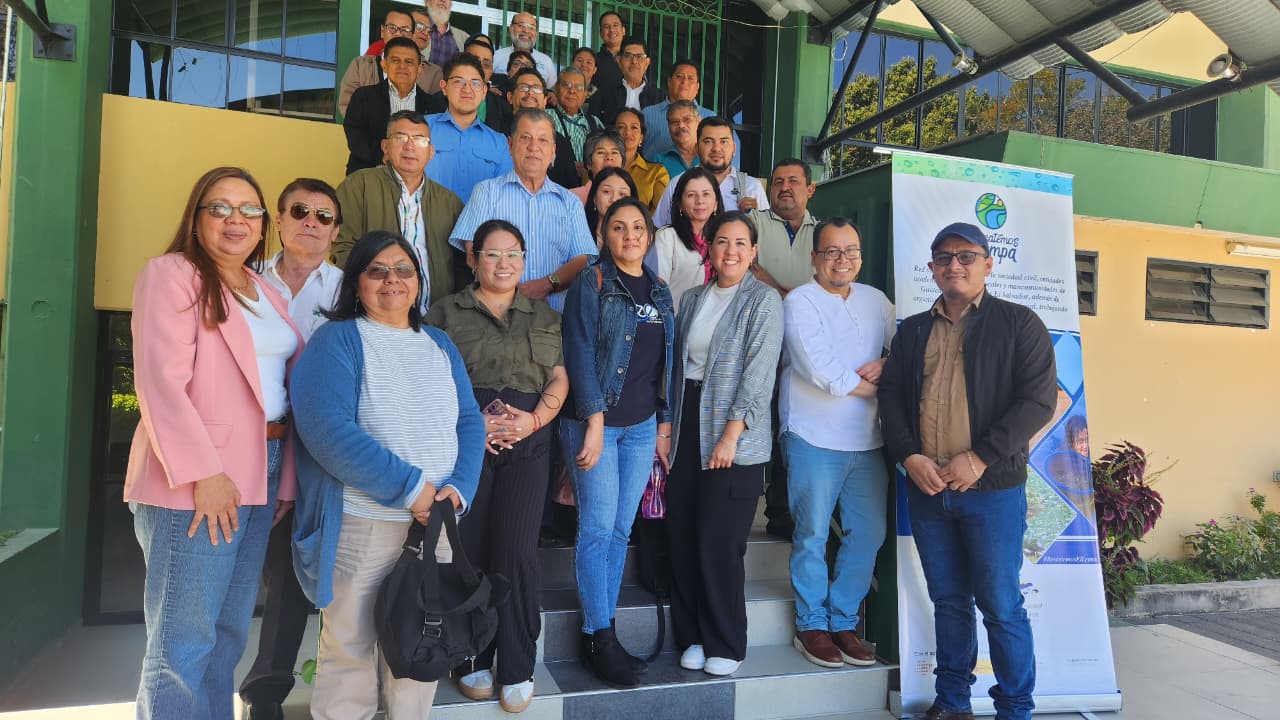
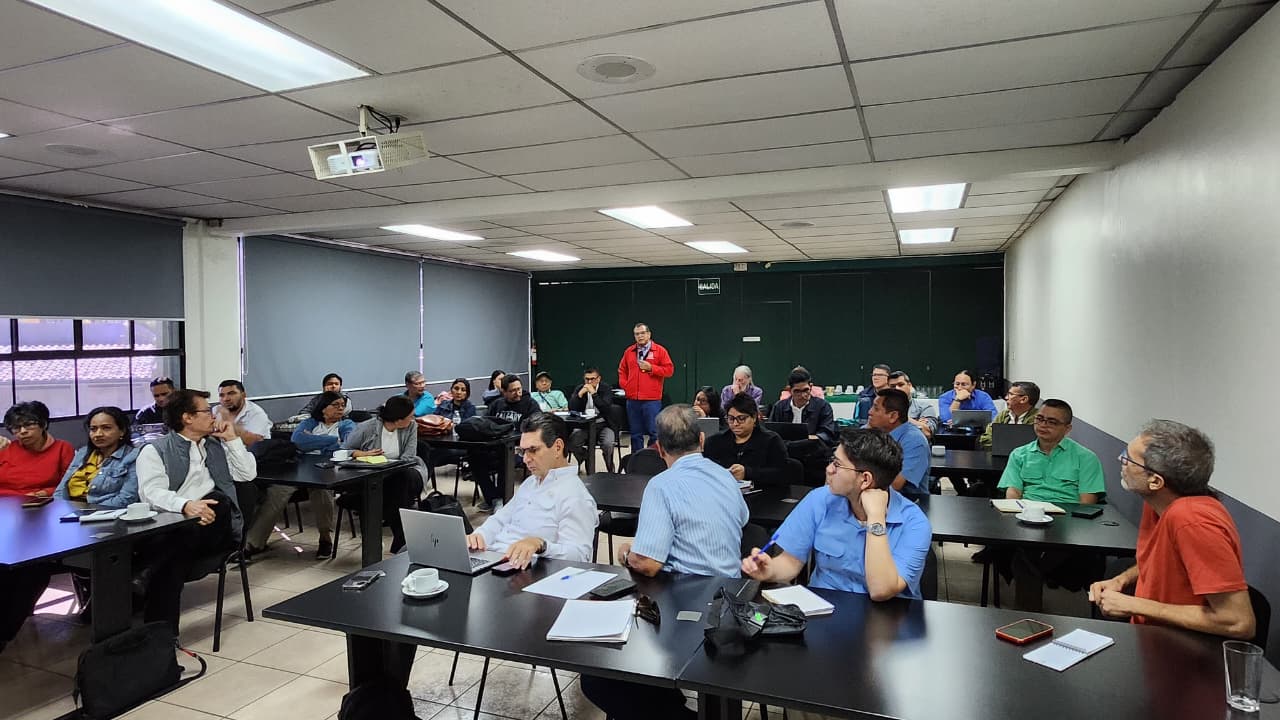
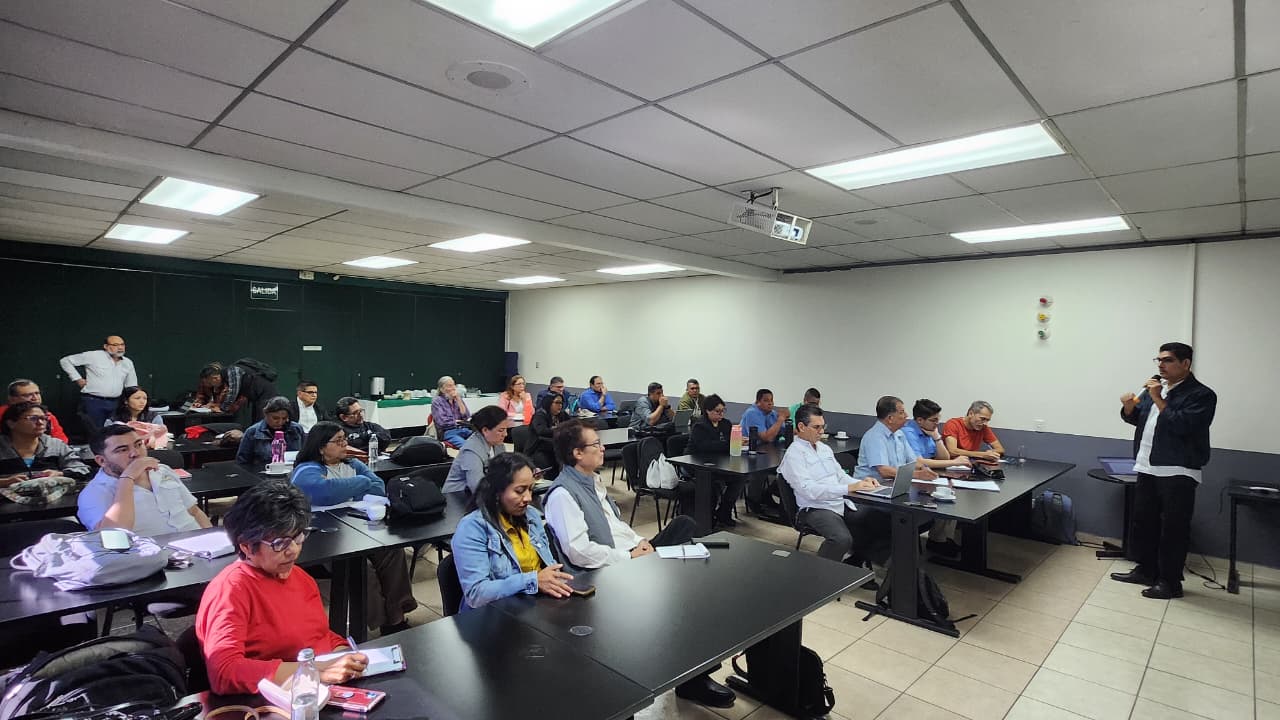
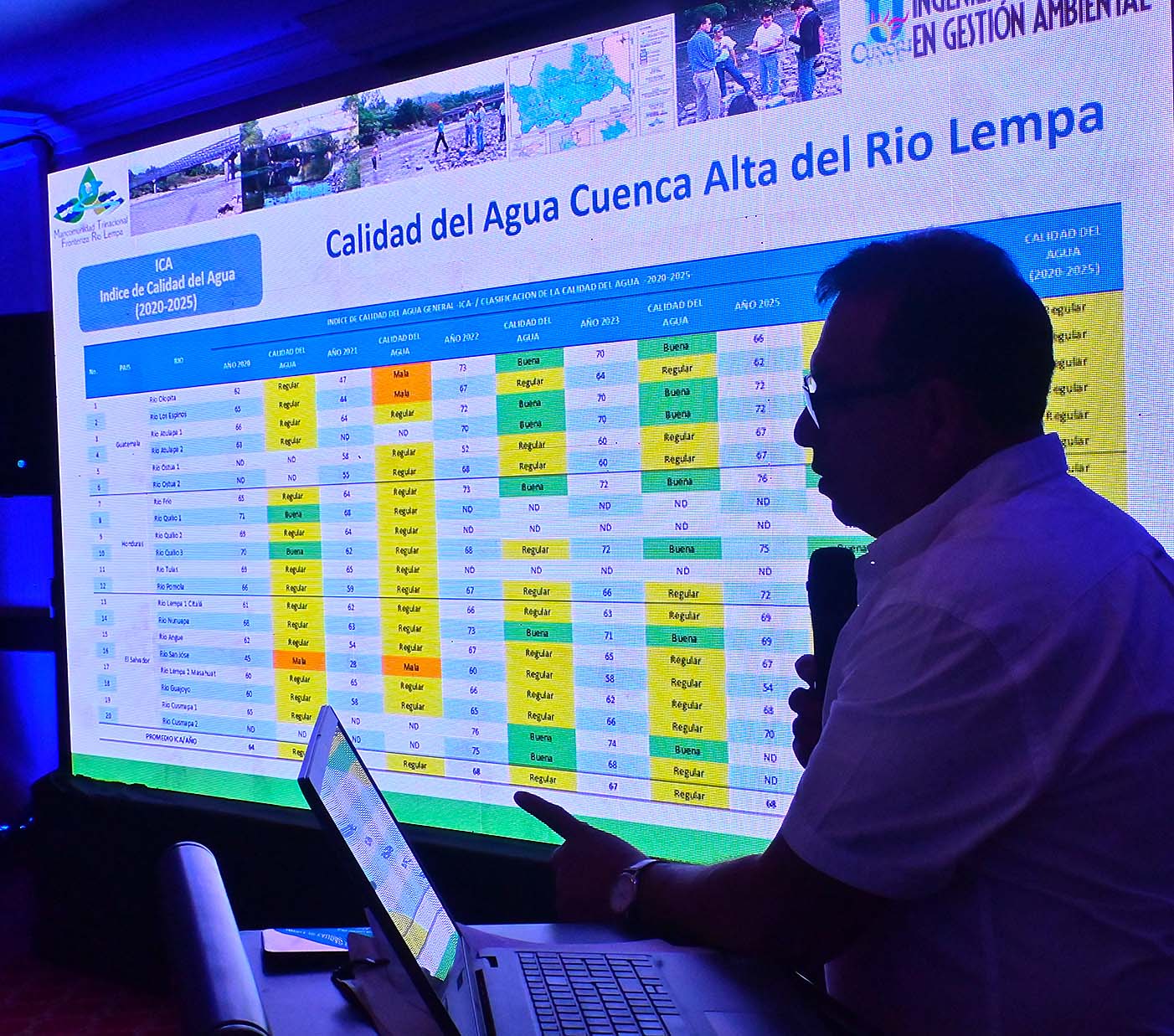
San Salvador, December 5, 2025. The water quality of rivers located in the upper Lempa River basin has declined to “Fair” over the last 15 years, reaching 65 points on the Water Quality Index (WQI) and coming very close to “Poor” water quality, according to the report “Water quality variability 2010-2025 and determination of heavy metals in the hydrological network of the upper Lempa River basin,” presented by the Environmental Management Engineering research team of the Centro Universitario de Oriente (CUNORI) of the University of San Carlos of Guatemala, at the “Regional Forum for the Life of the Lempa River: Territory, Cooperation, and Governance in the Face of the Climate Crisis in Central America,” held at a hotel in the capital.
The regional event was convened by the Tri-national Network for the Rescue of the Lempa River and the Network for Territorial Development of El Salvador (Red DT), as part of Territorial Development Week 2025, with the aim of creating a space for reflection, dialogue, and inter-institutional and tri-national coordination in the face of the rapid socio-environmental deterioration of this shared basin.
The report presented concludes that in the period from 2010 to 2025, the water quality index (WQI) has reached 65 WQI points, meaning it has changed from good (89-70) to fair (69-50), a drop of 25 points, placing the region in a critical situation. If the WQI reaches 50 points, it would be classified as “poor” water quality, limiting its use in every sense of the word.
“This means that we are 15 points (at 50 WQI) away from having no water for farming or drinking, but if we take immediate action, we can rescue some watersheds and rivers, so we would have more water to drink and produce more food in the future,” said Ramiro García, coordinator of CUNORI and the research team, which conducted its work in Guatemala, Honduras, and El Salvador.
Similar results were presented by Rubén Sorto from the Coatepeque Foundation in El Salvador, who discussed the “Current state of water quality in Lake Coatepeque” and questioned the approval of urban development projects that are degrading the lake's natural resources. “We cannot call it development when we are affecting the present and future of new generations,” he warned in his presentation, given the pressure that will be caused by the ‘Amanelli’ Towers, which will be developed by the company “Urbania” and authorized by the Ministry of Environment and Natural Resources of El Salvador, tripling the population living in such a vulnerable natural area.
Faced with this situation, “we need to raise awareness and unite to solve these serious pollution problems throughout the Lempa River basin,” said Martín Leiva, mayor of Chalatenango Centro, El Salvador, and vice president of the Lempa River Tri-national Border Community (MTFRL).
“I have been blessed to live about 300 meters from the Lempa River, where I have bathed, but as the speakers have said, pollution is increasing. If we do not raise awareness and unite, we will no longer be able to bathe or cultivate, and this will increase the problems not only in Chalatenango but throughout the country,” said the mayor.
“These research results challenge the states, because they need to be challenged in order to move forward, and we need to rise up and walk together, as the Popol Vuh teaches us,” said Héctor Aguirre, manager of the Tri-national Association and part of the coordinating team of the Tri-national Network for the Lempa River.
However, the member institutions of the Network not only presented the results of their latest research, but also gave examples of “good environmental, water, and land management practices carried out by local entities in the basin, such as: ”Sistema Agroforestal Quezungual" (SAFQ) in southern Lempira, Honduras, where burning has been suspended, the use of chemicals has been reduced, and they have been gradually replaced by organic fertilizers and foliar products, explained Leonel Amaya Alemán, mayor of Candelaria, Lempira, Honduras.
Another successful project, the “Trinational Agroecological Training Farm,” which is being developed in Candelaria de la Frontera, Santa Ana, El Salvador, was presented by Dr. María Julia Medina, coordinator of the local public policy “Zero Hunger,” implemented by the Trinational Border Community of the Lempa River (MTFRL) in municipalities of the Trinational region.
According to Medina, the farm is not only a school for learning sustainable agriculture, but also a place where people can learn how to farm tilapia and bonsai trees, and increase their income with surplus crops. But above all, it is a place for education on food security, where we teach farmers about the nutritional benefits of each vegetable and other crops, which helps reduce malnutrition in families.
Another speaker was Magdalena Mejía, a community leader from the San Simón River basin in Morazán, El Salvador, who, together with a group of women, works on the “Protection of the San Simón River sub-basin.” Their techniques in alternative agriculture and their knowledge of human rights and gender issues enable them to improve the environment and the family economy.
The work carried out by the 516 farmers who are members of the Atiocoyo Sur Irrigators Association in Santa Ana, El Salvador, was another example of good practices. By developing tilapia farming, reducing chemical fertilizers, collecting plastic containers, and reusing water, according to Anibar Santos, manager of ARAS.
To conclude the event, Patricia Gálvez, president of the Cítala Community Development Association (ADECOCIT), and Caleb Padilla, president of the non-governmental organization “Un Pulmón Más” (One More Lung), called for action by presenting eight proposals for joint work: i) Establish a dialogue table for the three countries—El Salvador, Guatemala, and Honduras—convened by the Government of El Salvador; ii) Establish a permanent meeting space for the Lempa River with specific agendas and goals for restoration and protection, iii) Have the Government of El Salvador declare the Lempa River basin a priority area for the Nationally Determined Contribution (NDC 3.0). We request that specific goals be included, iv) That the Ministry of Education institutionalize March 14 as National Lempa River Day, as an annual day of environmental education and action, so that all schools in the country develop ongoing activities to raise awareness, learn about, and care for the Lempa River, v) Implementation of a comprehensive restoration program for the entire basin, vi) A new legal framework for the conservation and restoration of the basin, vii) Institutions that design agricultural programs should accompany and train farmers in sustainable agroecological practices, thereby reducing pressure on soils, water, and forests, and, viii) Civil society, private enterprise, institutions, and citizens should make a collective, responsible, and long-term commitment. Join us in this effort, because the future of the Lempa is in our hands.
With these results, the institutions that make up the Network seek to motivate central governments, local governments, civil society entities, universities, the private sector of the three countries, and international cooperation, among others, to coordinate joint actions in favor of the comprehensive management and decontamination of the Lempa River, as a contribution to peace, cooperation, and development in the Central American region.
The Lempa River, which is 422 km long, originates in Olopa, Guatemala, crosses western Honduras, flows through El Salvador, and empties into the Pacific Ocean, making it the most important basin on the Pacific slope in Central America. Its territory covers 17,926 km², with 214 municipalities and districts and an estimated population of 5.42 million inhabitants, who depend directly on the environmental services provided by the basin, such as water, air, ecosystems, among other benefits. Of these, 1.5 million in the San Salvador metropolitan area are supplied by this important river.
The project “Shared Waters: Governance for integrated management and adaptation to climate change in the Tri-national Lempa River Basin in the dry corridor of Central America - PHASE II” is implemented by the Tri-national Lempa River Border Community and funded by the Heinrich Boell Foundation and the Spanish Agency for International Development Cooperation (AECID), AECID, through the Catalan Fund for Development Cooperation. Its objective is to “improve multilevel governance for the integrated management of the Lempa River Tri-national Basin, as a contribution to improving the quality of life of its inhabitants.”
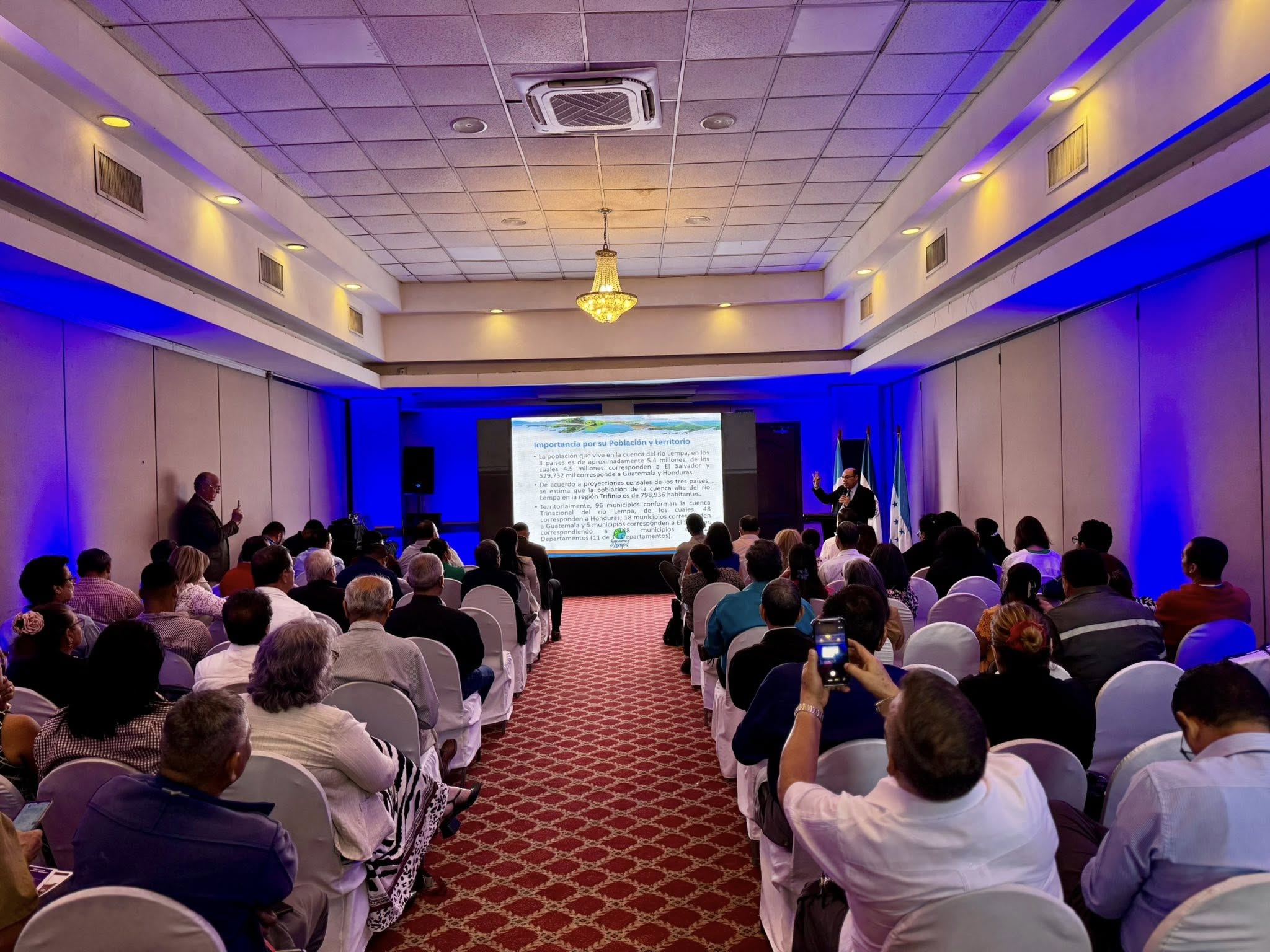
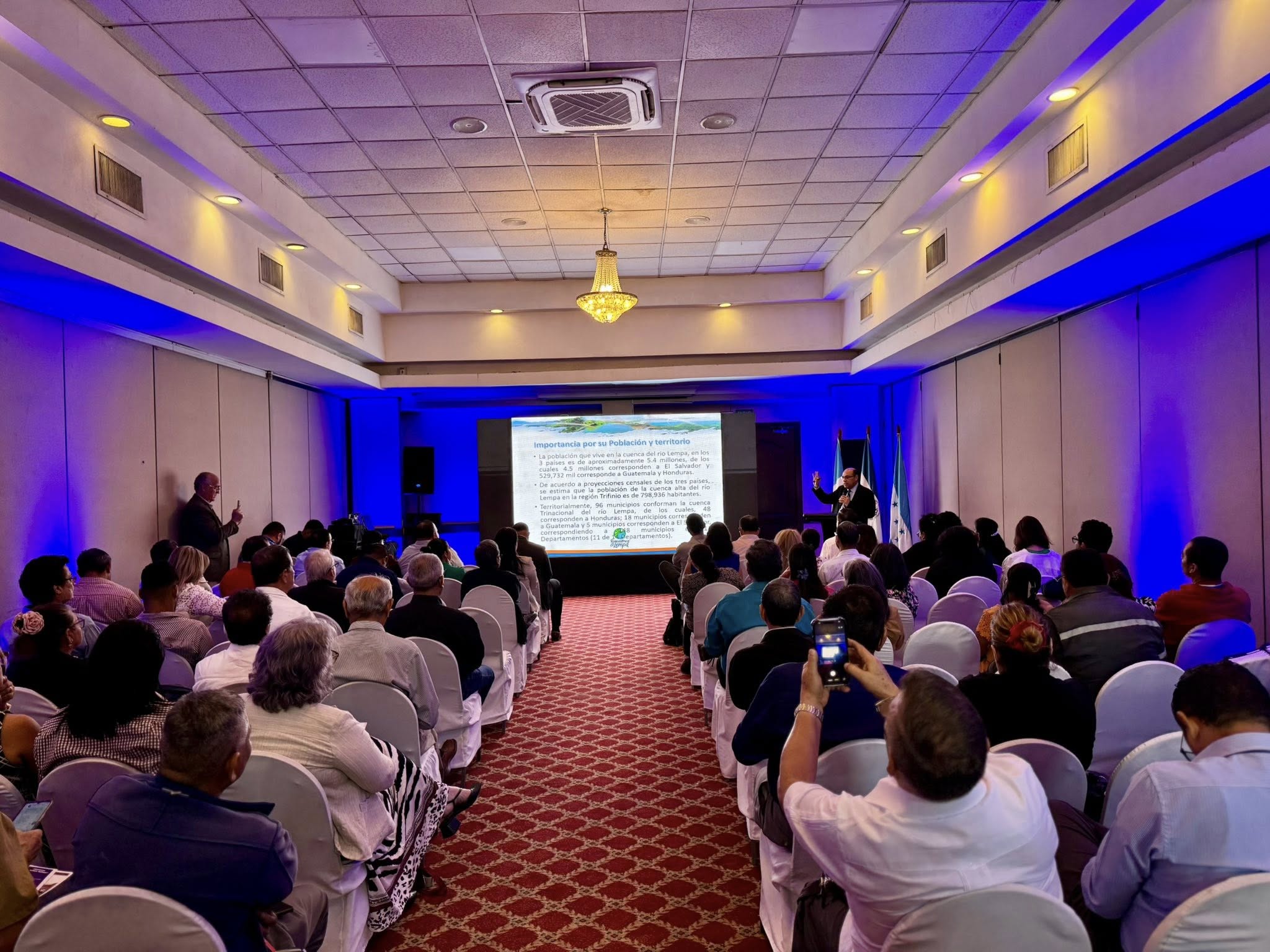
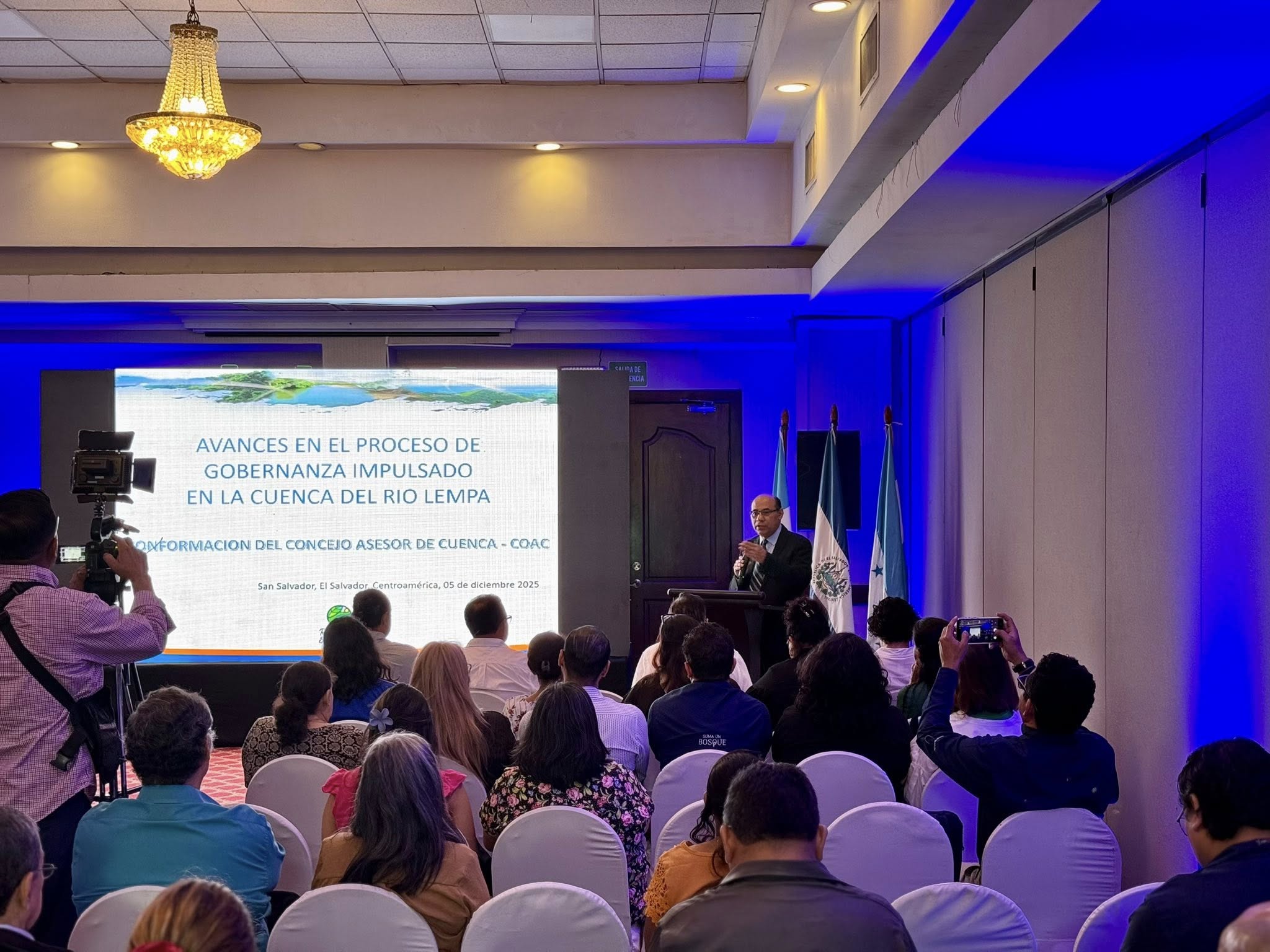


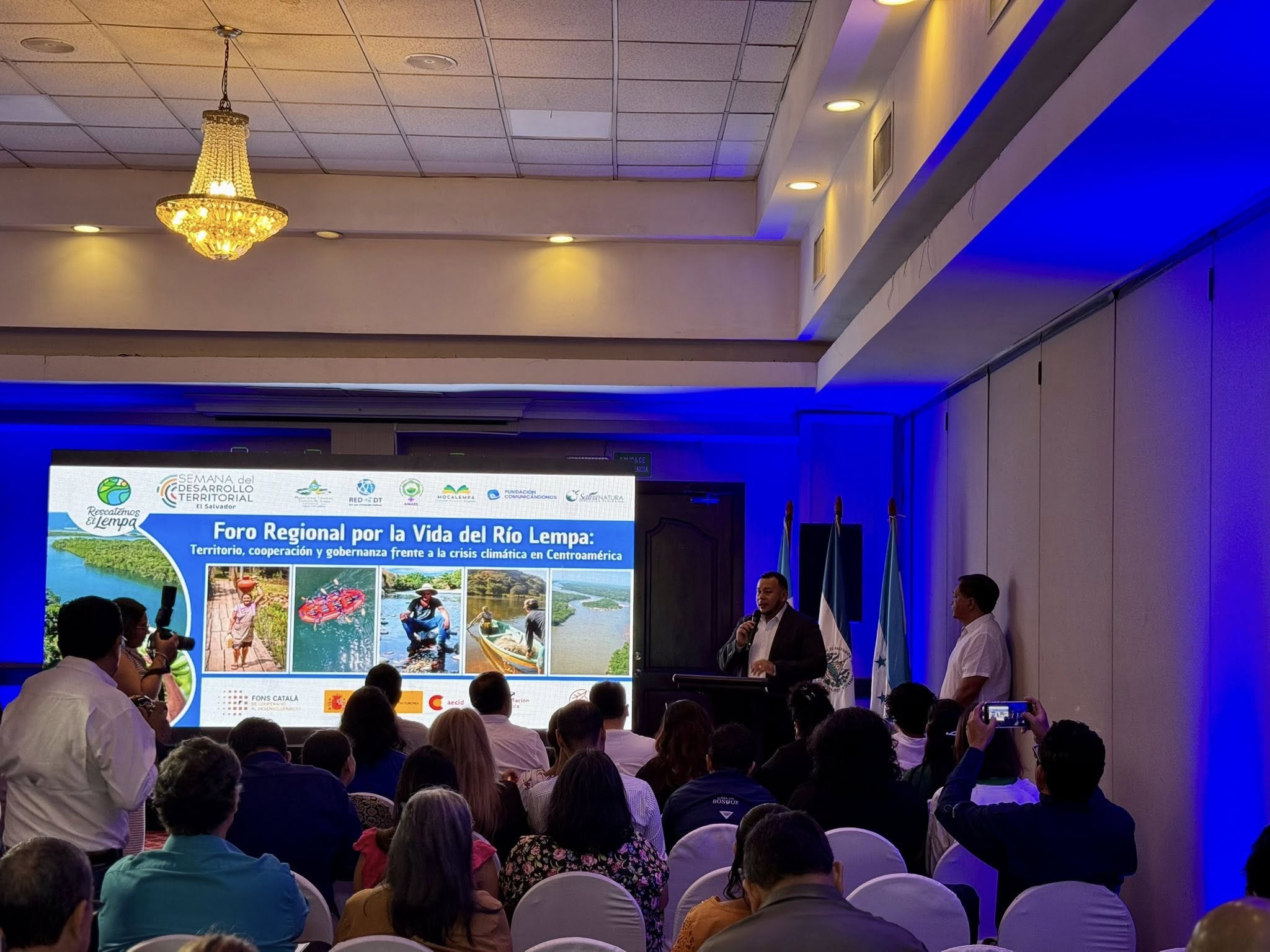
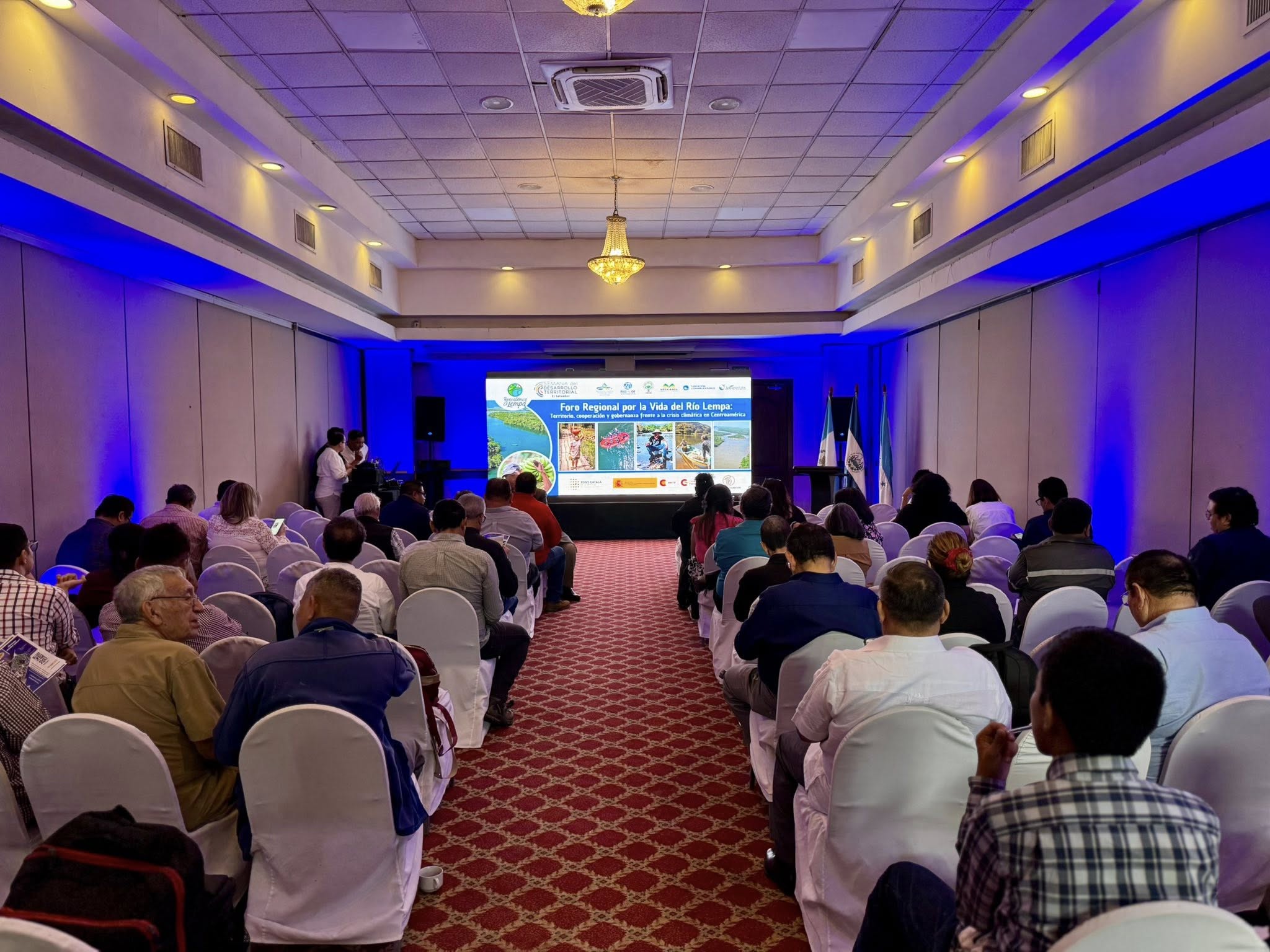


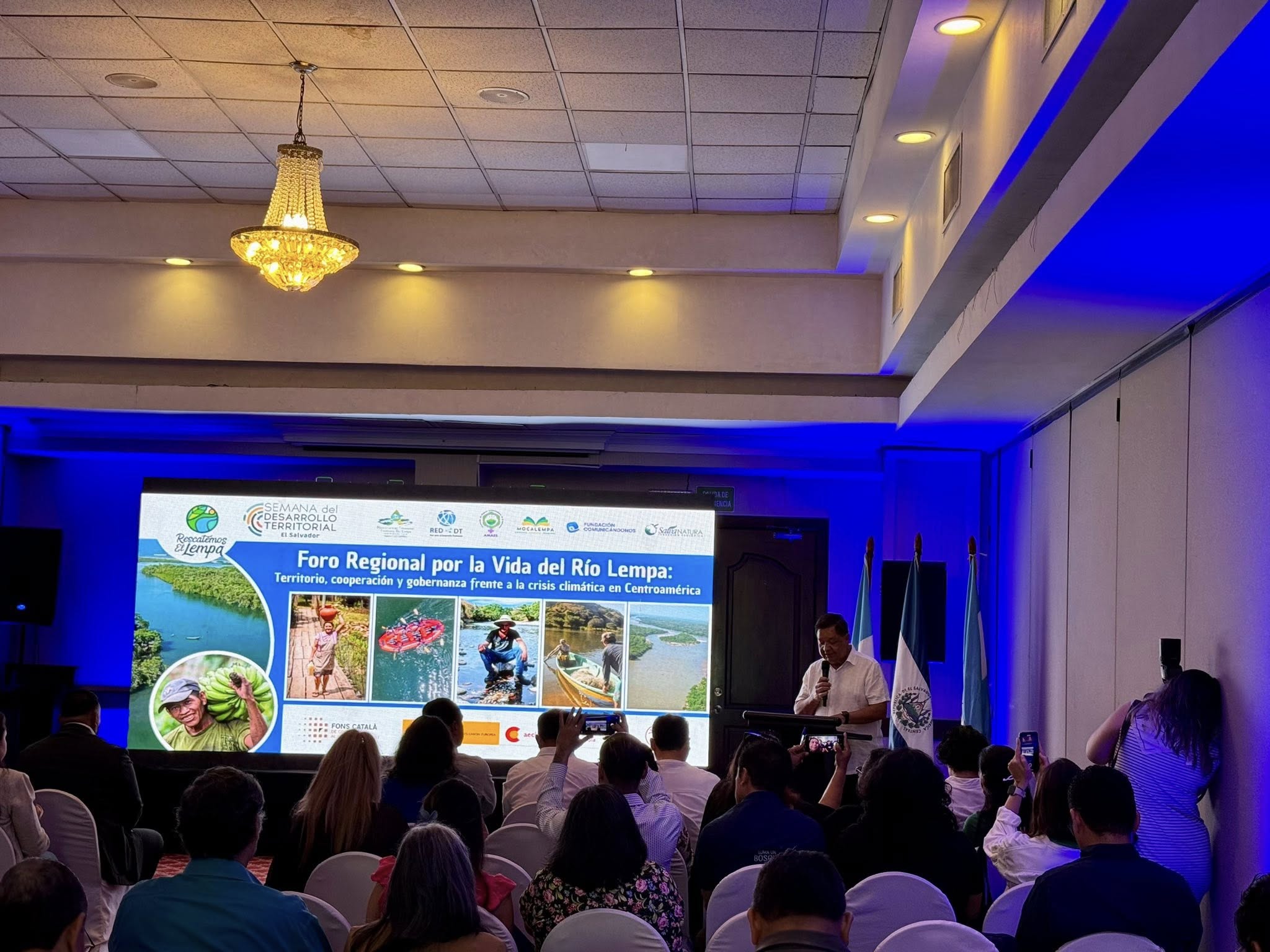
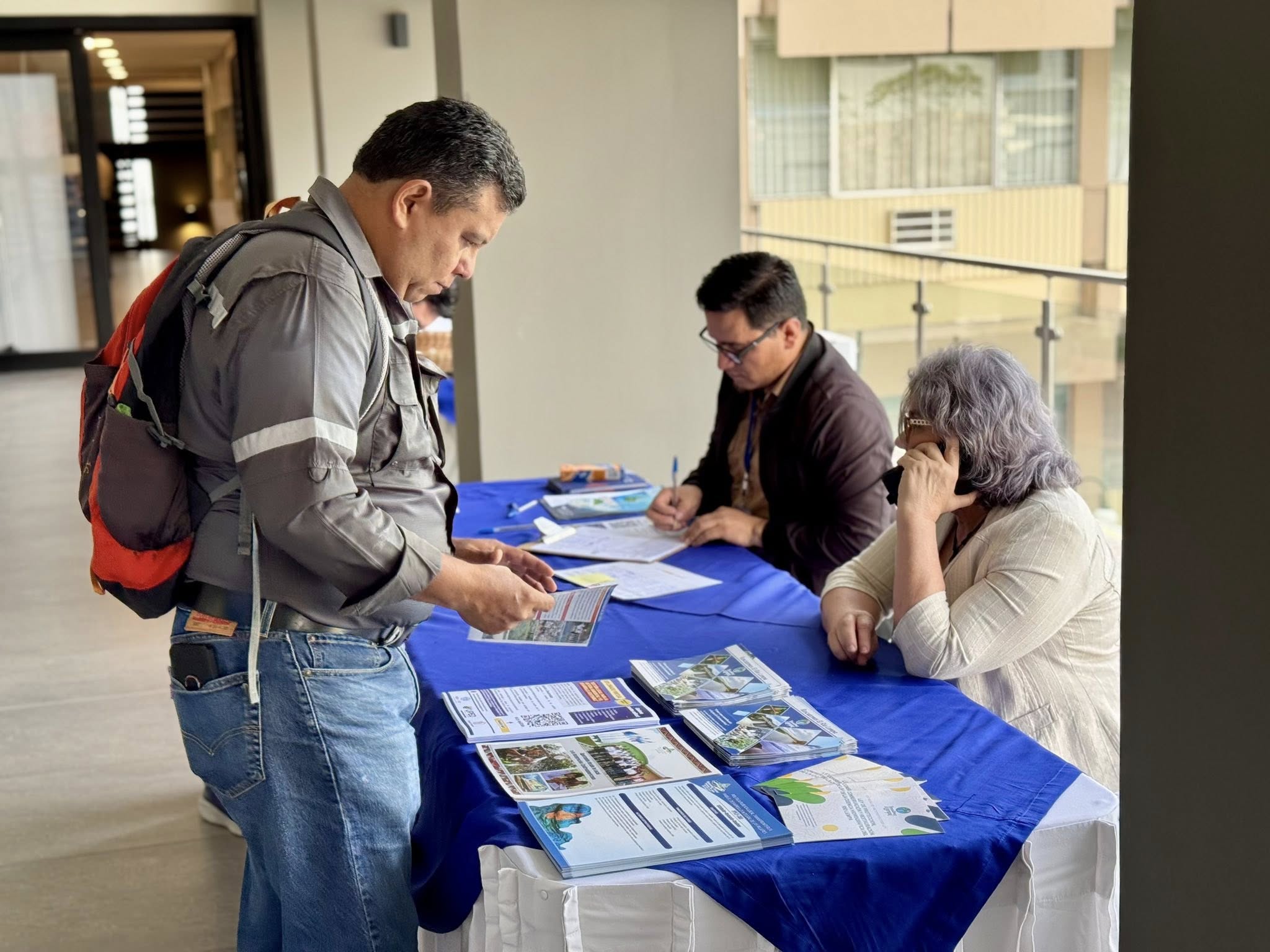
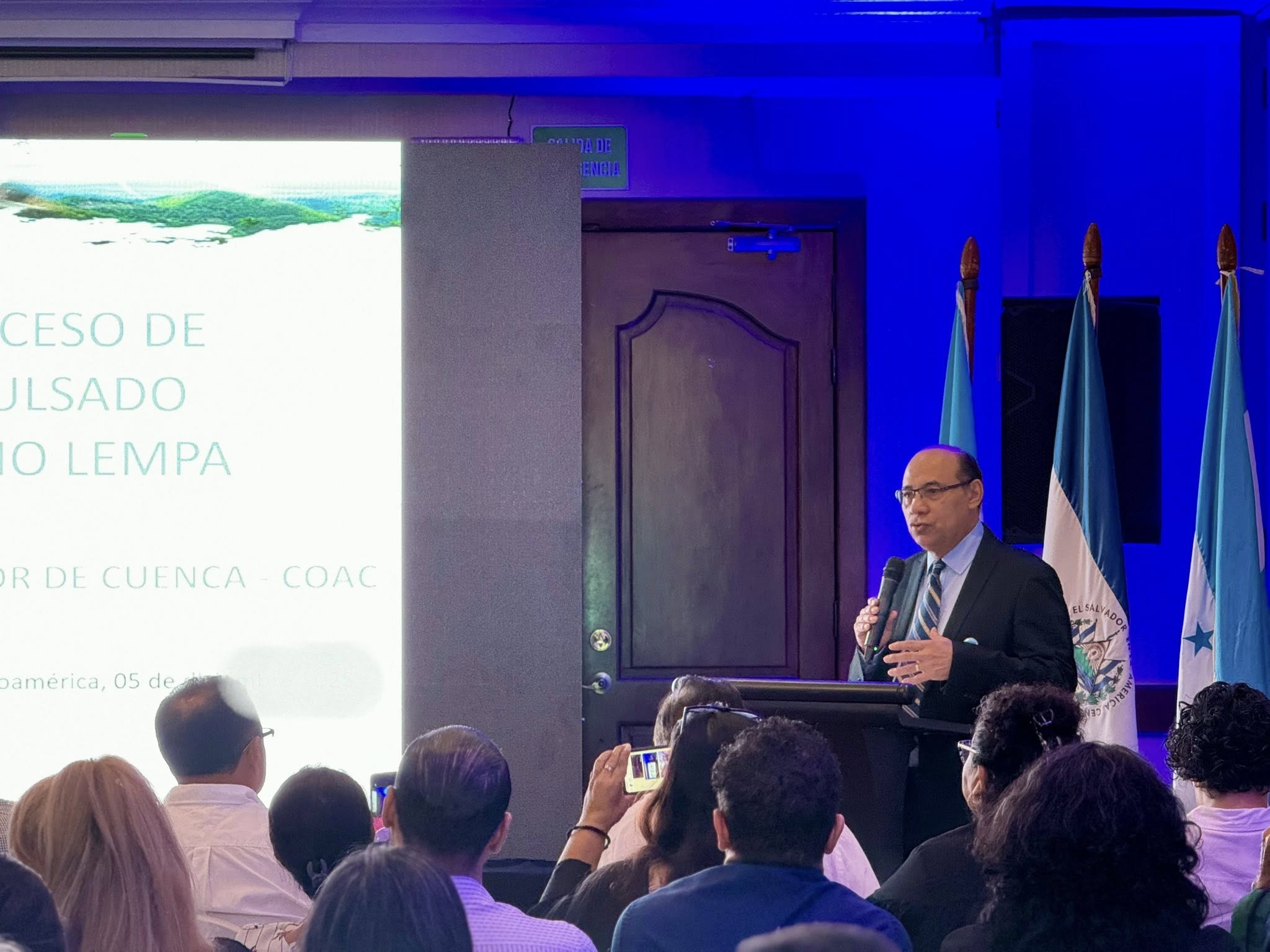

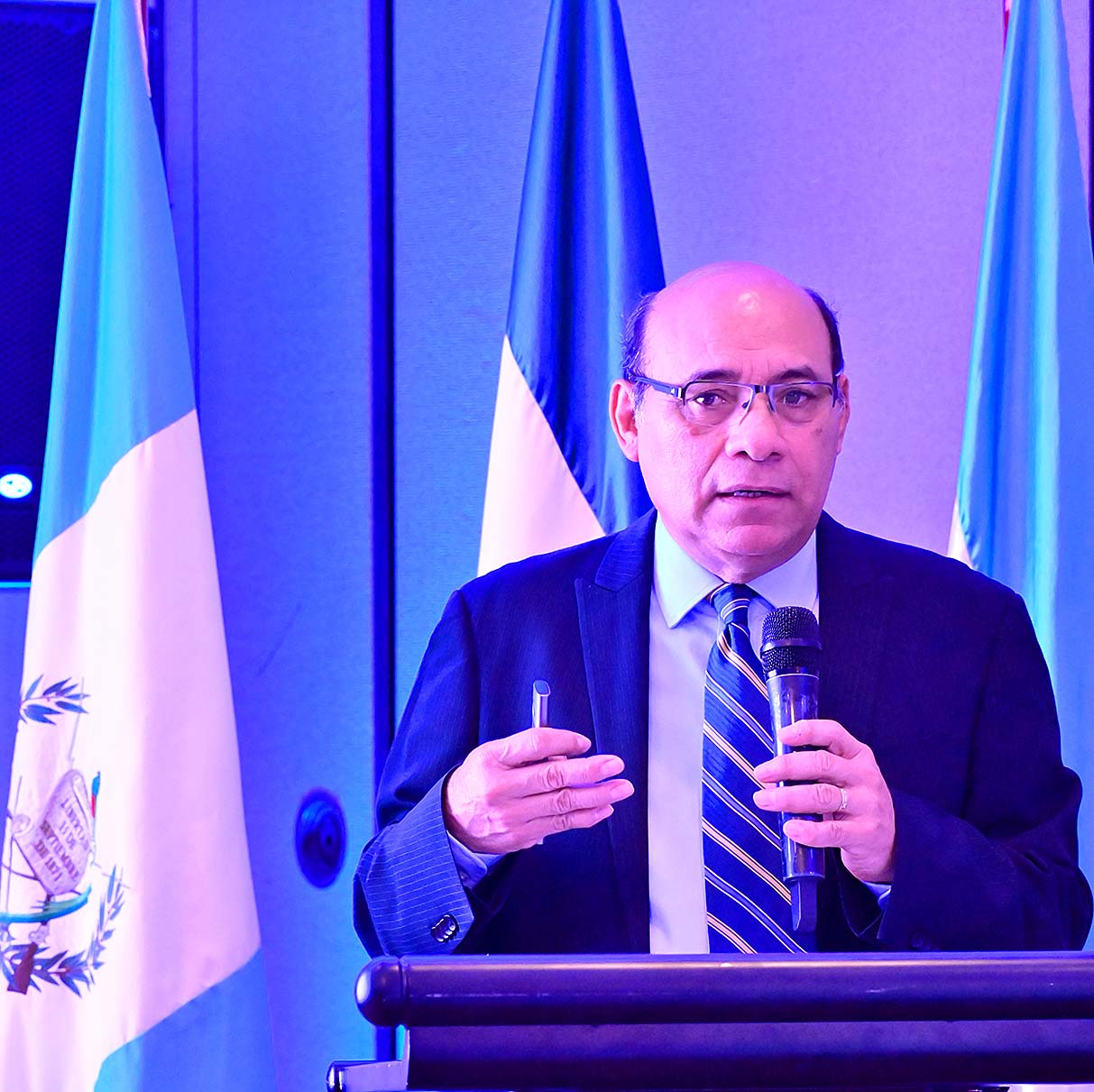
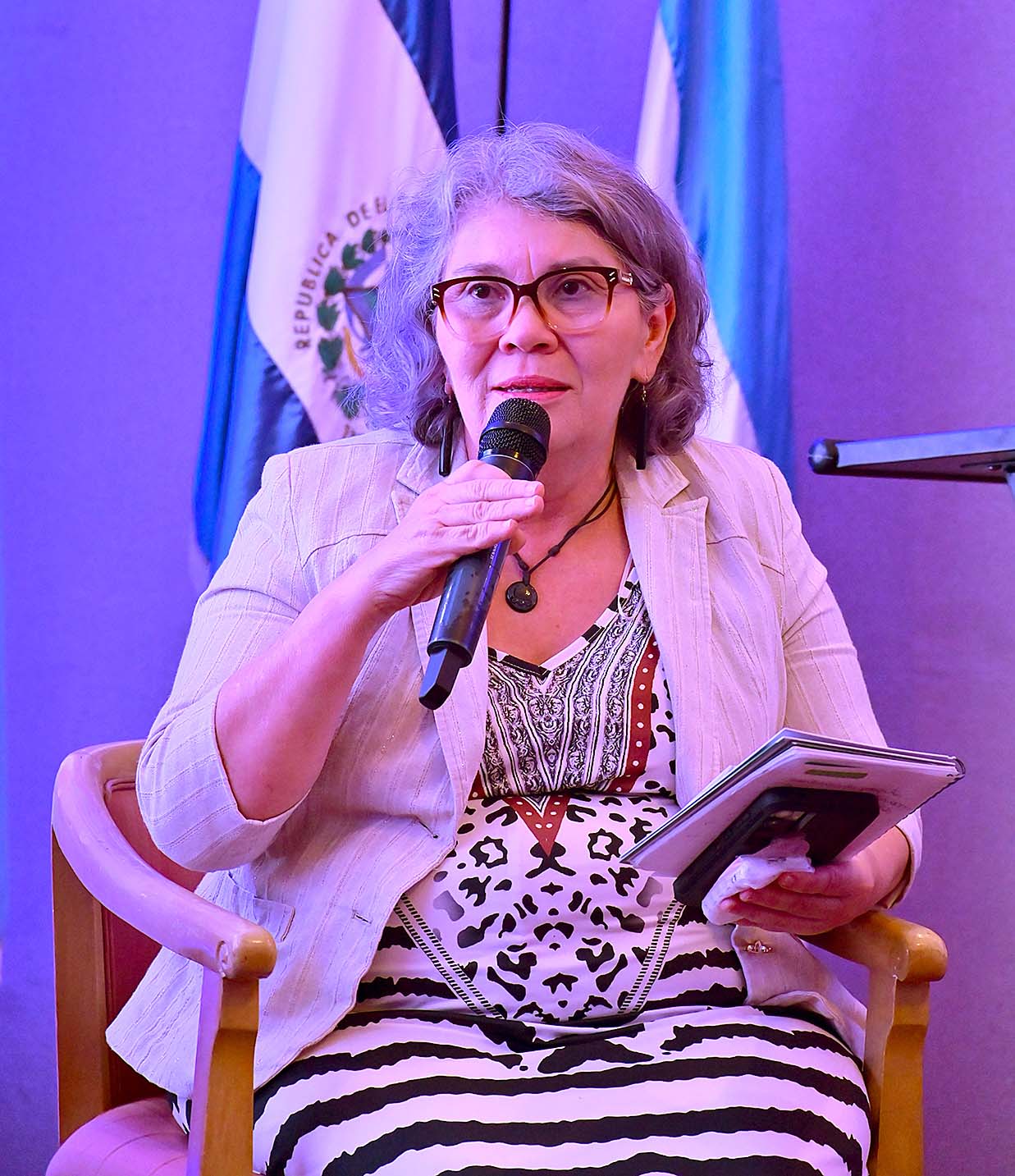
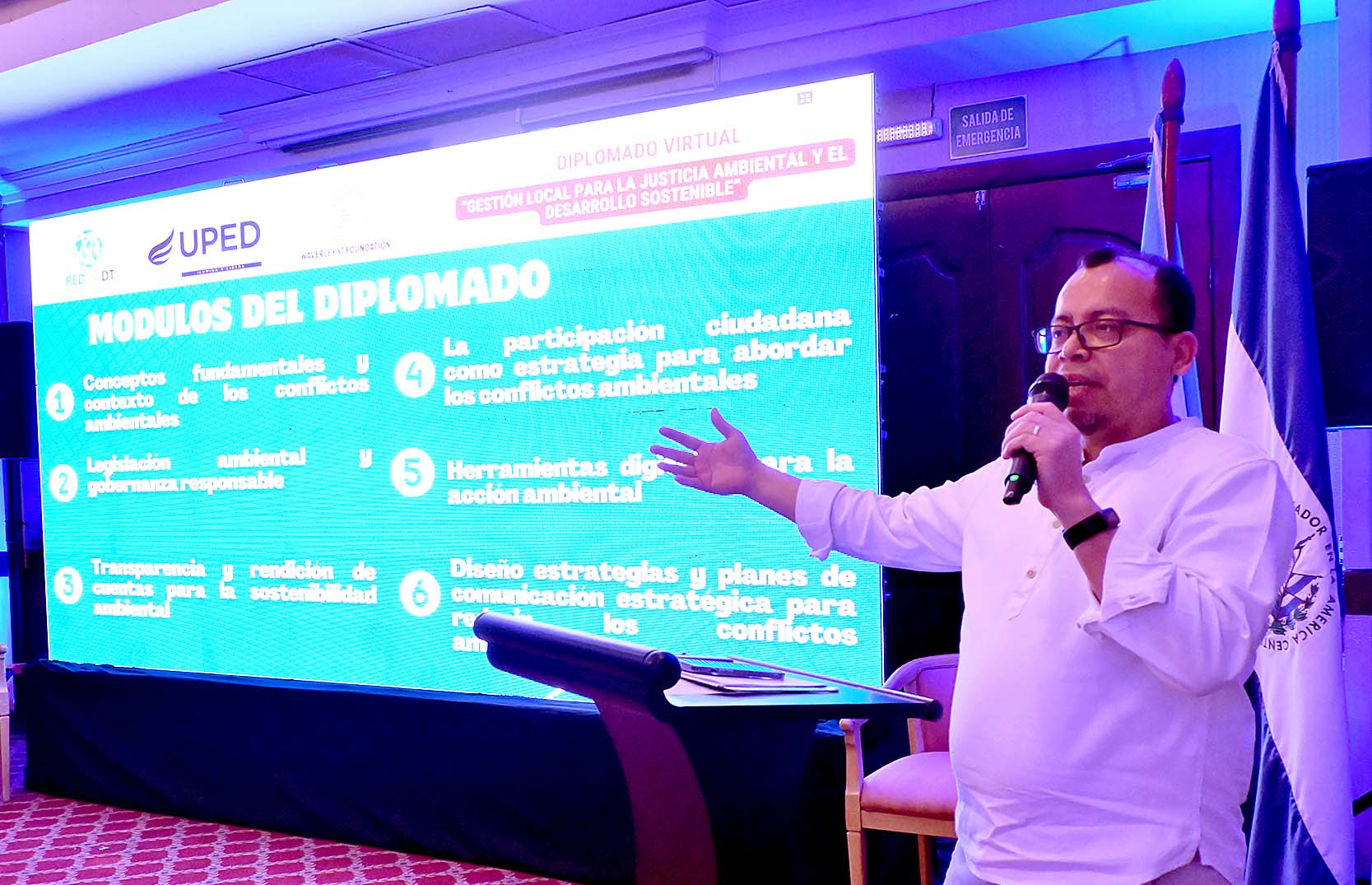
San Salvador, December 5, 2025, the Tri-national Border Community of the Lempa River actively participated in the Regional Forum for the Life of the Lempa River: Territory, Cooperation, and Governance in the Face of the Climate Crisis in Central America, a space for dialogue, reflection, and tri-national coordination between Guatemala, Honduras, and El Salvador.
During the event, scientific research, good practices in local environmental management, and important advances in governance and coordination processes for the recovery of the Lempa River, the most important basin on the Pacific slope in Central America, were shared.
We highlight the participation of local governments, civil society organizations, academia, the private sector, and international cooperation agencies, who reaffirmed their commitment to protecting this river that originates in Guatemala, crosses Honduras, and reaches El Salvador, benefiting more than 5.4 million inhabitants.
The Forum concluded with a regional call to action, inviting all sectors to join forces to address the causes of pollution, promote integrated water resource management, and work for the life, recovery, and restoration of the Lempa River.
From the Tri-national Community, we reaffirm our commitment to promoting actions, alliances, and public policies that strengthen environmental governance and the sustainable development of our communities.
During the event, scientific research, good practices in local environmental management, and important advances in governance and coordination processes for the recovery of the Lempa River, the most important basin on the Pacific slope in Central America, were shared.
We highlight the participation of local governments, civil society organizations, academia, the private sector, and international cooperation agencies, who reaffirmed their commitment to protecting this river that originates in Guatemala, crosses Honduras, and reaches El Salvador, benefiting more than 5.4 million inhabitants.
The Forum concluded with a regional call to action, inviting all sectors to join forces to address the causes of pollution, promote integrated water resource management, and work for the life, recovery, and restoration of the Lempa River.
From the Tri-national Community, we reaffirm our commitment to promoting actions, alliances, and public policies that strengthen environmental governance and the sustainable development of our communities.
For the life and rescue of the Lempa River!
We work together for a sustainable territory and a more resilient Central America.
We work together for a sustainable territory and a more resilient Central America.
#RescatemosElLempa
_thumbnail.jpeg)
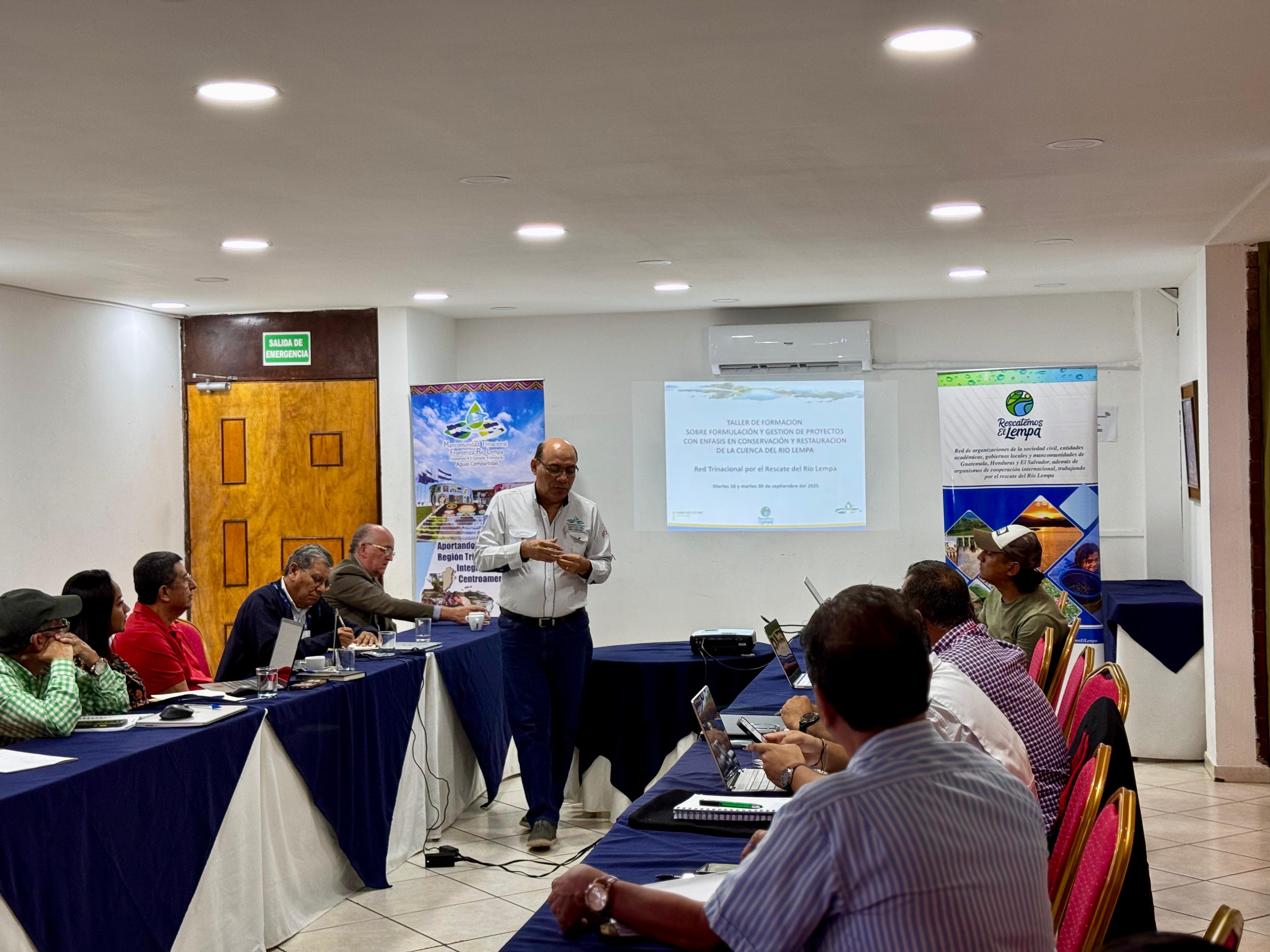
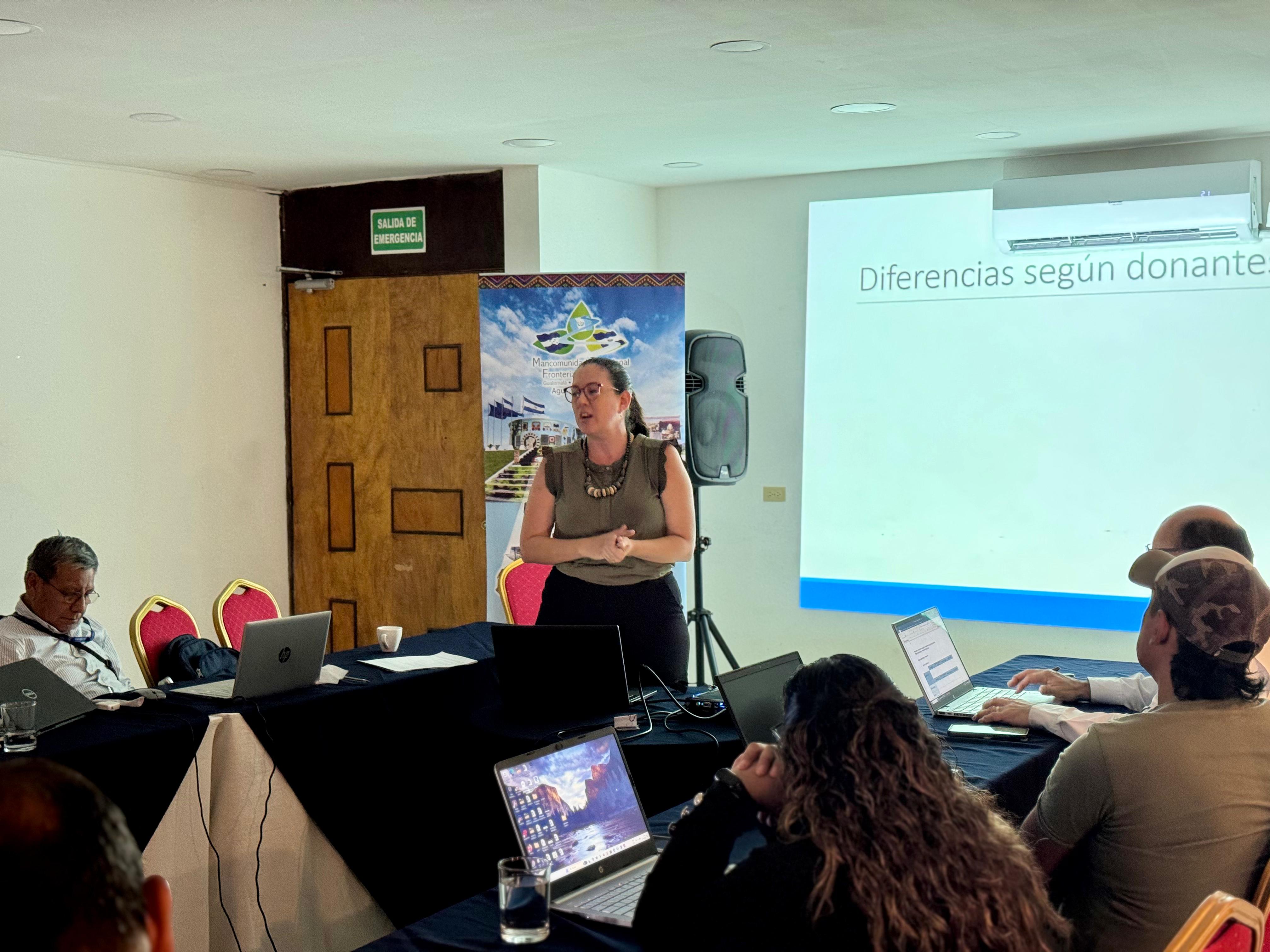
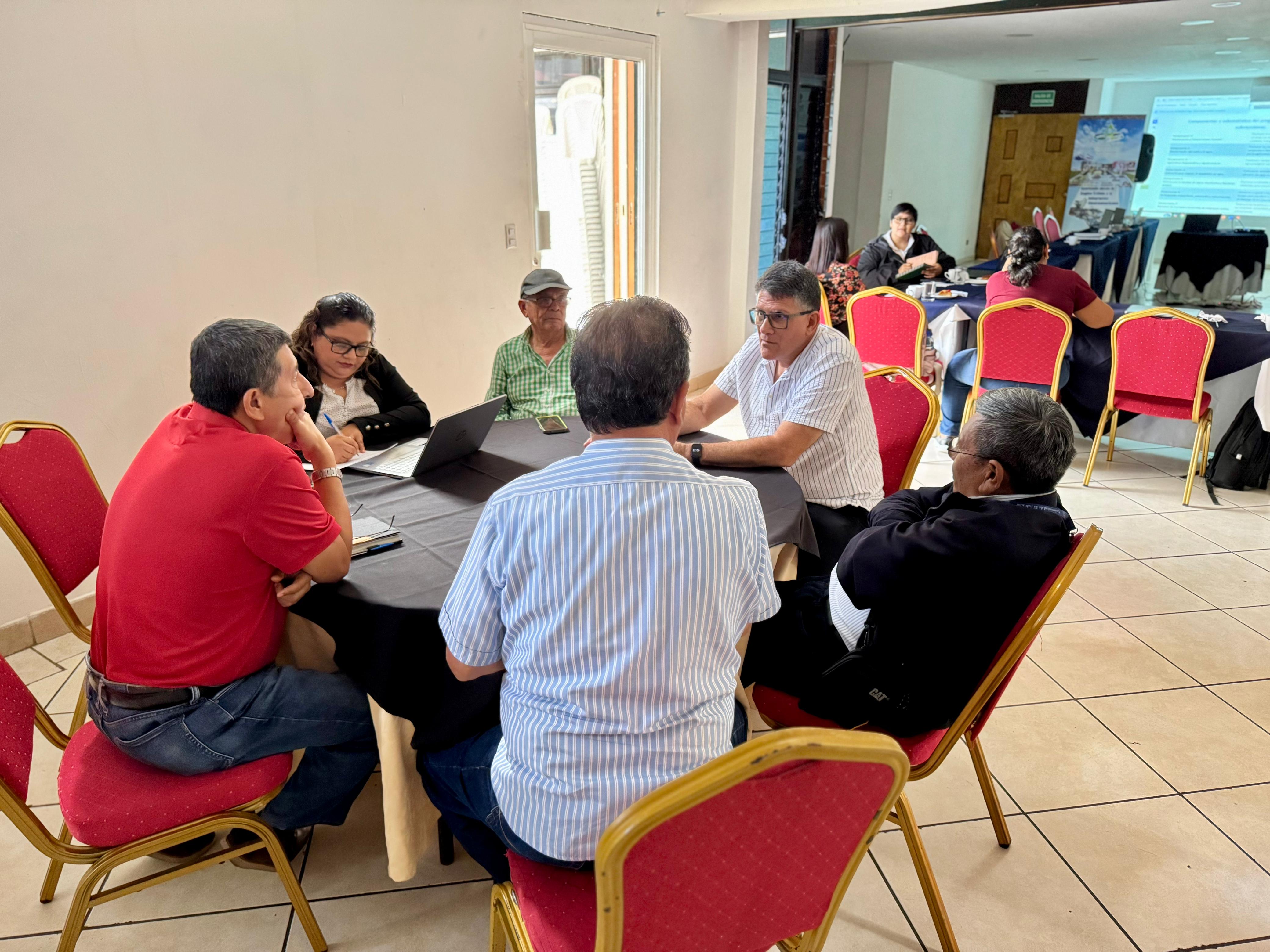
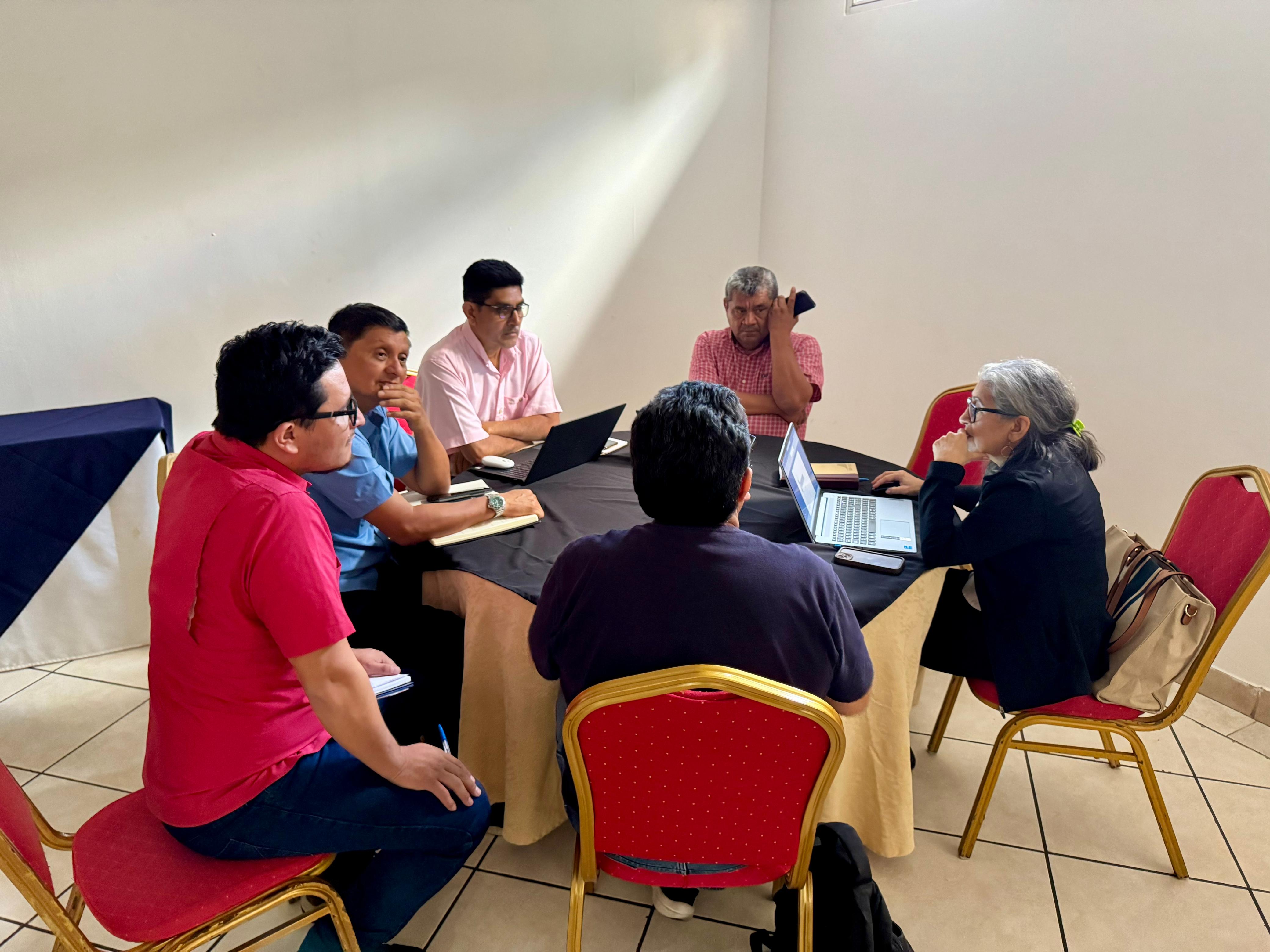
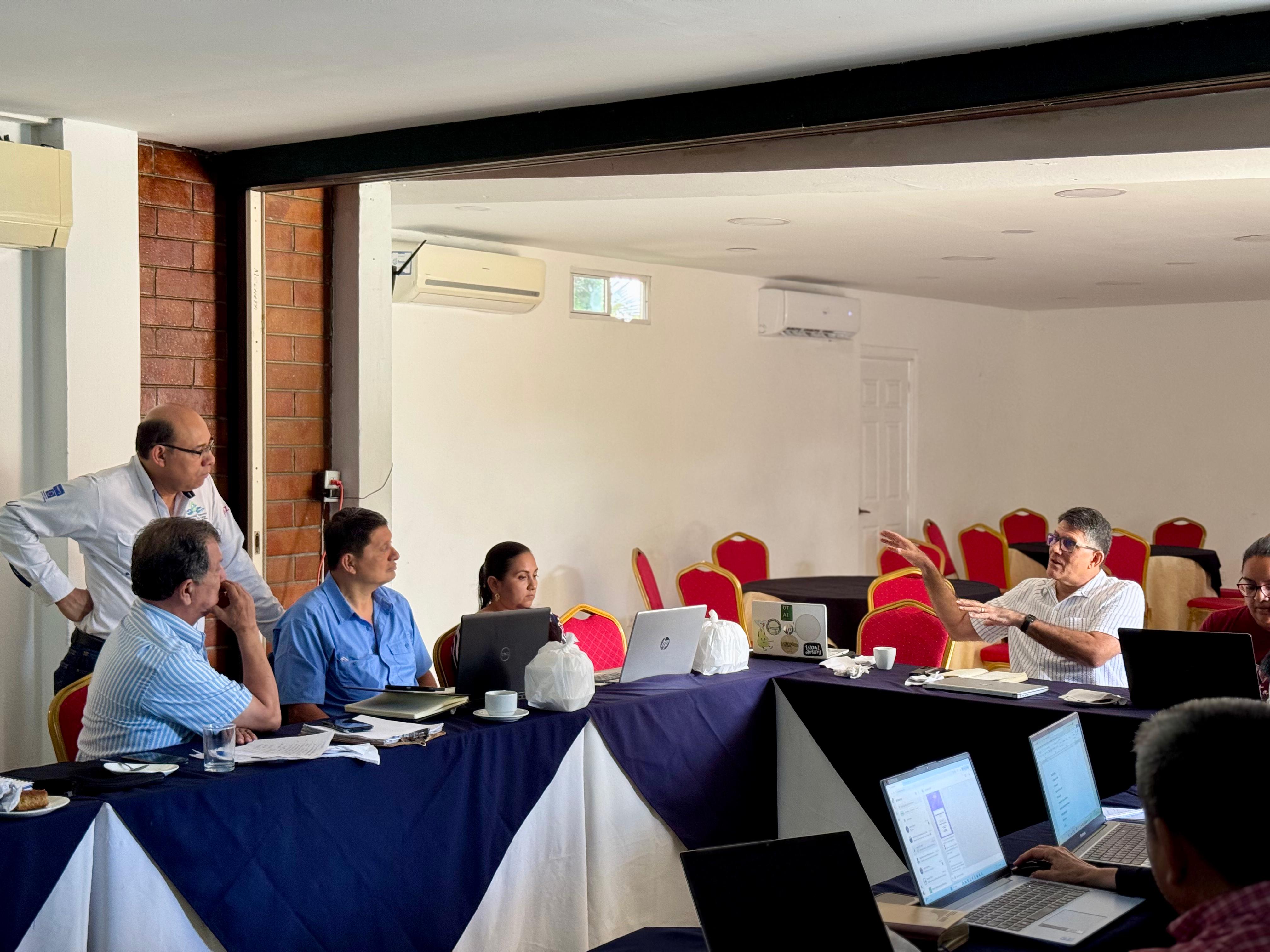
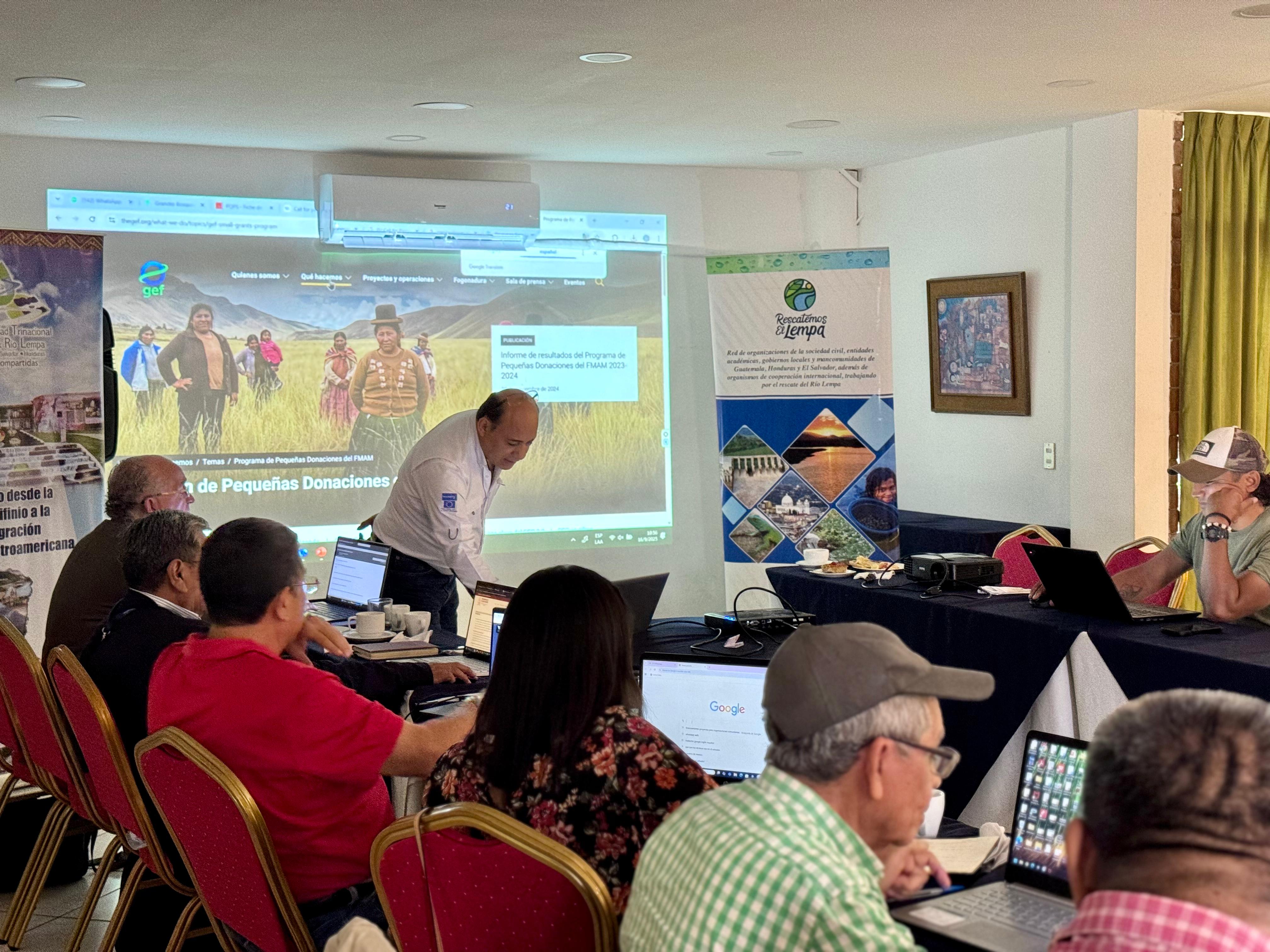
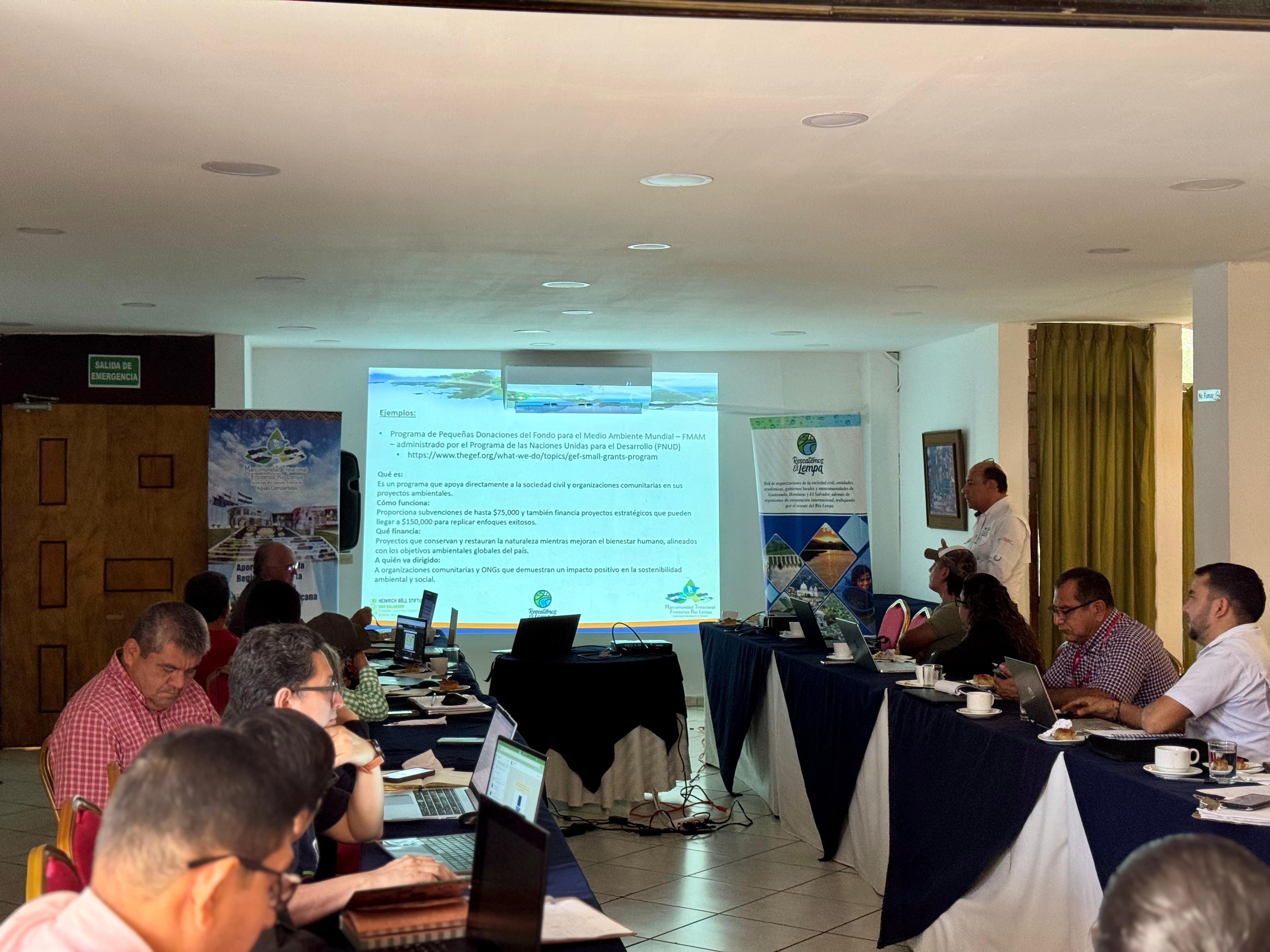
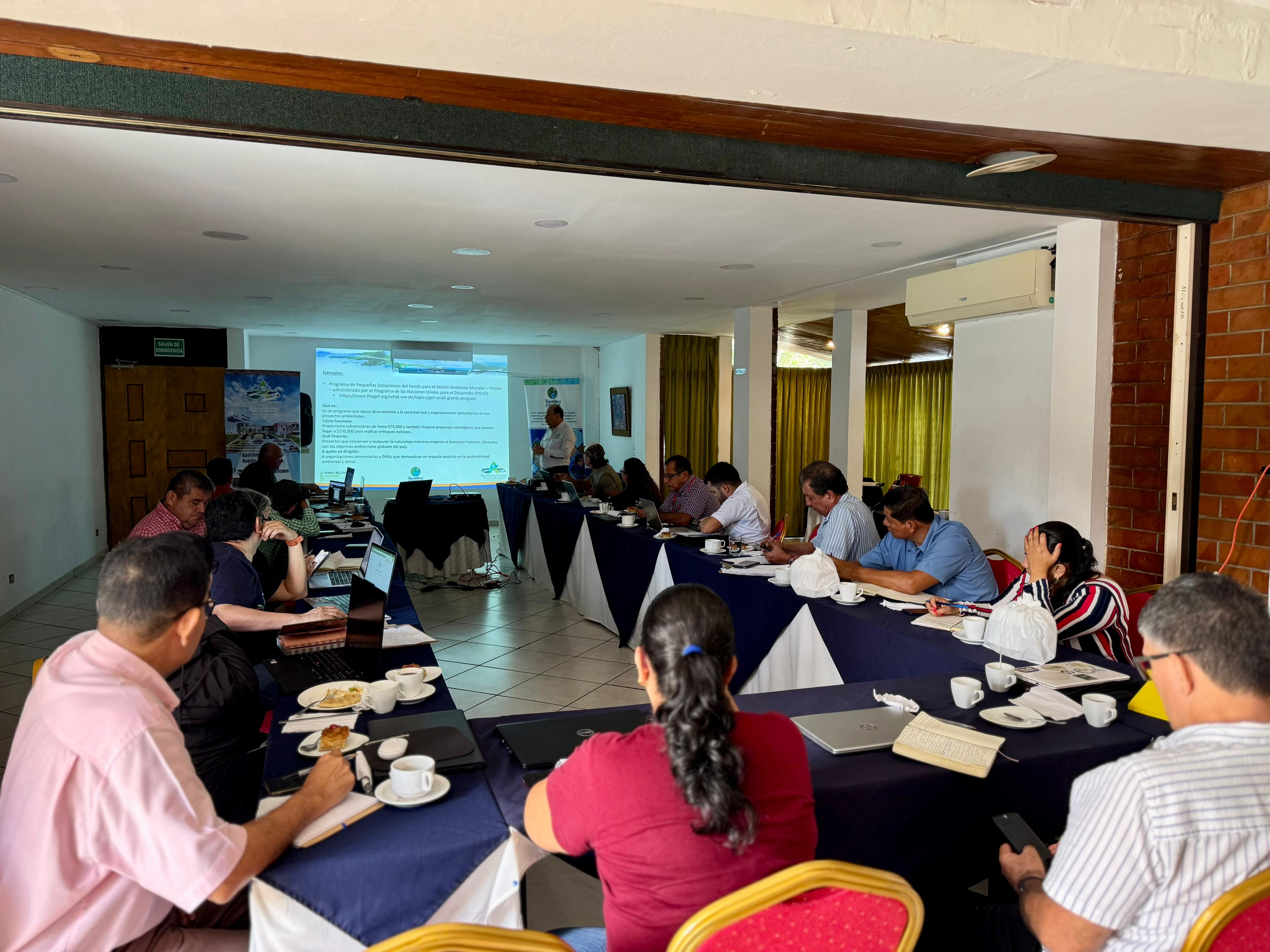
On September 16, 2025, the Tri-national Network for the Rescue of the Lempa River held a training workshop on project formulation and management with an emphasis on the conservation and restoration of the Lempa River Basin, with the participation of technical representatives from the Network's member organizations.
During the workshop, key topics were addressed, such as:
- Identification of funding sources.
Construction of a Problem Tree.
Application of the Logical Framework Methodology to define objectives,
results, and indicators.
Importance of establishing strategic alliances to access conservation funds.
The workshop was facilitated by specialists from the Tri-national Border Community of the Lempa River (MTFRL) and the Heinrich Böll Foundation, who highlighted the importance of preparing solid proposals that allow resources to be channeled into environmental projects in the basin.
With these actions, the Tri-national Network reaffirms its commitment to strengthening local capacities and moving toward the restoration and protection of the Lempa River, a source of life for millions of inhabitants of Guatemala, Honduras, and El Salvador. #RescatemosElLempa
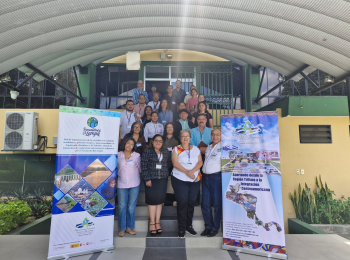
On Friday, May 23, the Tri-national Network for the Rescue of the Lempa River held its second General Assembly at the facilities of the Association of Engineers and Architects of El Salvador (ASIA), with the participation of 25 member institutions from different areas of the Lempa River basin.
During the meeting, key organizational issues for strengthening the Network were addressed, and coordination mechanisms were established between the organizations with the aim of developing joint actions for the benefit of the rescue and protection of the Lempa River.
New organizations joining this valuable trinational initiative were also welcomed, reaffirming the collective commitment to the restoration and conservation of this important shared water resource.

As part of National Lempa River Day, celebrated on Friday, March 14, in San Salvador, various institutions from Guatemala, Honduras, and El Salvador formed the first Tri-national Roundtable for the Governance of the Lempa River Basin, a multisectoral and tri-national cooperation initiative that will promote the protection and sustainable management of the Lempa River.
The event, held at an art museum in the Salvadoran capital, was attended by representatives of government institutions, environmentalists, universities, civil society, the private sector, and communities from the three Central American countries.
The Lempa River is the only river in Central America that flows through Guatemala, Honduras, and El Salvador. It is the main source of energy, agricultural development, livestock, and water for millions of people in those countries. However, it faces problems of pollution and overexploitation. To address this situation, the Roundtable seeks to strengthen trinational coordination and integrated water resource management.
The day began with welcoming remarks from Nelly Rivera, representative of the Tri-national Network for the Rescue of the Lempa River, who invited attendees to work together to rescue this important watershed that unites these three nations.
“I am happy to be at this meeting that seeks to unite us to work for this river, which is only 300 meters from my house,” said Walter Pineda, mayor of San Francisco del Valle, Ocotepeque, Honduras, and vice president of the Board of Directors of the Tri-national Border Community of the Lempa River (MTFRL), the institution organizing the event.
Ingrid Wehr, regional director for Central America at the Heinrich Böll Foundation, echoed this sentiment: “I am very happy to see representatives from official institutions, environmentalists, and academia. We welcome you all and thank you for joining this effort.”
The central theme was presented by Ingrid Hausinger, Ecology Coordinator at the Heinrich Böll Foundation, who detailed the levels of pollution and deforestation affecting the Lempa River basins, coupled with the new threat of mining in El Salvador.
“This is a major setback. Now we have to face the possibility of new metal mining in the Lempa River basin. Metal mining, however they want to sell it, is not environmentally friendly, and there is no such thing as green mining,” said Hausinger.
The second panel was led by Sergio Razera, president of the Board of Directors of the Piracicaba, Capivai, and Jundiaí River Water Agency (PCJ Agency) of Brazil, who shared successful experiences of multisectoral governance in the São Paulo River basin.
Paul Hicks, interim director of the Lempa River Conservation and Restoration Program, and Catherine Vásquez, technical deputy director of the program, presented strategies for river restoration.
Ariana Bazzaglia Badía, deputy director of authorizations at the Salvadoran Water Authority (ASA), spoke about the Water Information System (SIHI), a key tool for permit management and water monitoring.
One of the most important points of the meeting was the presentation of the Lempa River Basin Governance Roundtable by Héctor Aguirre, manager of the MTFRL. “This space seeks to strengthen water resource governance at both the national and trinational levels,” he said.
But, above all, "to raise awareness among the population, which we must involve in this effort, because the population is key to bringing about the strategic changes we need, contributing to the formulation of local, national, and trinational public policies at the treaty level that promote the sustainable and equitable use of water resources and incorporate a multisectoral and trinational vision based on the principles of sustainability, environmental protection, and social equity," said Aguirre.
Subsequently, the formal signing of the accession agreement and the official reading of the Charter took place, formalizing the participating organizations' commitment to the sustainable management of the river.
The event was enhanced by the participation of artists from the three countries, who conveyed messages of fraternity and protection of natural resources.
The event closed with an invitation to join the Movilízate por el Río Lempa (Mobilize for the Lempa River) campaign, which seeks to raise public awareness about water conservation through the use of the hashtags #RescatemosElLempa and #SomosRíoLempa on social media.


